What to Pack for Page, Arizona
The Page area is high desert at 4,300 feet. The air is extremely dry, the sun is intense, and the temperature can swing 40 degrees between midday and midnight. Most packing mistakes fall into three categories: not bringing enough water, wearing the wrong shoes for Antelope Canyon, and underestimating the sun. This page is a checklist to prevent those mistakes.
The Non-Negotiables
Do not come to Page without these, regardless of season:
- Water: One gallon per person per day if you are doing any outdoor activity. A single 16-ounce bottle is not enough for a morning that includes Antelope Canyon and Horseshoe Bend. The dry air pulls moisture from your body faster than you feel it.
- Sunscreen: SPF 30 or higher, broad-spectrum. Reapply every two hours. The UV index in Page reaches extreme levels (11+) in summer and remains high (6–10) even in spring and fall. You will burn faster here than at the beach.
- Hat: Wide-brimmed, not a baseball cap. Your ears and neck need coverage. The sun is intense at this elevation because there is less atmosphere to filter it.
- Closed-toe shoes: Required for Antelope Canyon. Strongly recommended for Horseshoe Bend, hiking trails, and any unpaved surface. The desert ground is rocky, sandy, and occasionally home to scorpions and rattlesnakes.
- Sunglasses: Polarized if possible. The glare off sandstone and water is significant.
- Lip balm with SPF: The dry air and sun will crack unprotected lips within a few hours.
What to Wear
The key to desert clothing is layers and fabric choice. In summer, lightweight, long-sleeved synthetic or linen shirts protect your skin better than tank tops and use less sunscreen. In winter, temperatures drop below freezing at night, so you need a warm layer even if the afternoon felt mild.
Summer (June–August): Lightweight, light-colored, loose-fitting synthetic or linen clothing. Long sleeves and long pants protect against sun and cactus. Avoid cotton — it holds sweat and dries slowly, which sounds good until you realize that wet cotton in dry air actually accelerates heat loss and can lead to hypothermia if the temperature drops suddenly (which it does, even in summer, when the sun goes down). A light jacket or fleece for evening is essential; nights drop into the 60s even in July.
Winter (December–February): Base layer (synthetic or wool), insulating mid-layer (fleece or down), and a windproof outer shell. Mornings start below freezing. Afternoons reach the 40s or 50s. A warm hat and gloves for sunrise activities.
Shoulder season (March–May, September–November): Layers you can add and remove. A short-sleeve base layer, a light fleece, and a windbreaker covers most conditions. March and April are windy — secure hats with a chin strap or choose a fitted cap.
For slot canyon photography: Wear dark, neutral clothing — black, navy, or dark gray. Bright colors reflect onto the canyon walls and show up in photographs. White and red are the worst offenders. This matters if you are taking photos in Antelope Canyon, where the narrow walls act like reflectors.
Footwear by Activity
| Activity | Recommended footwear | What to avoid |
|---|---|---|
| Antelope Canyon (all sections) | Closed-toe walking shoes or trail runners with good grip | Sandals, flip-flops, Crocs, open-toe shoes of any kind. Operators will turn you away. |
| Horseshoe Bend | Trail runners, hiking shoes, or sturdy sneakers | Flip-flops, high heels, brand-new shoes you have not broken in |
| Lake Powell (beach/swimming) | Water shoes or old sneakers for rocky beaches; bare feet for sand beaches | Nothing specific to avoid, but sharp rocks under water make water shoes useful |
| Lake Powell (boating/kayaking) | Non-slip boat shoes or water shoes with grip | Flip-flops on boats (slip hazard) |
| Desert hiking | Hiking boots or trail runners with ankle support and aggressive tread | Canvas sneakers, running shoes with worn soles, anything without ankle support on uneven terrain |
| Remote trailheads (White Pocket, Alstrom Point) | Hiking boots; shoes you do not mind getting sandy | Flip-flops, sandals, low-top canvas shoes |
Bags and What You Can Carry
Antelope Canyon has strict bag restrictions. Most tour operators prohibit backpacks, purses, fanny packs, and hydration packs. Some allow clear plastic bags only. The reason is spatial: the canyon is narrow, and a bulky bag can snag on walls or block other visitors. Check your confirmation email for your specific operator's policy.
What you can bring into Antelope Canyon:
- Phone or camera (in your hand or pocket)
- One bottle of water (handheld, not in a pack)
- Wallet and keys (pockets)
- Small clear plastic bag (if your operator allows it)
Leave everything else in your vehicle. Do not bring a tripod, monopod, or selfie stick — all are banned since 2019.
For Horseshoe Bend, Glen Canyon Dam, and hiking trails, a small daypack is fine. Bring a lightweight packable bag that you can stuff in a pocket when you reach Antelope Canyon.
Camera and Electronics
Heat drains batteries faster than cold. Bring spare batteries or a portable charger for your phone. If you are using a dedicated camera, bring a second battery and a second memory card. The combination of heat, GPS use, and constant photography will deplete a single battery by midday.
Tripods: Banned in all sections of Antelope Canyon. Do not bring one. Handheld photography only.
Drones: Prohibited on all Navajo Nation land (including Antelope Canyon and Monument Valley) and at Glen Canyon National Recreation Area. Leave the drone at home.
For Lake Powell: Bring a dry bag or waterproof phone case. Water splashes, sand, and sun are hard on electronics. Dry bags are available for rent at Wahweap and Antelope Point marinas, but bringing your own is cheaper.
For night photography: A headlamp with a red-light mode preserves your night vision. Standard white headlamps ruin stargazing for everyone nearby.
Seasonal Packing Lists
Summer (June–August)
- Lightweight long-sleeve shirts (2–3)
- Lightweight long pants or hiking pants (2 pairs)
- Shorts for Lake Powell (1–2 pairs)
- Swimsuit
- Light jacket or fleece for evening
- Wide-brimmed hat
- Sunglasses (polarized)
- SPF 30+ sunscreen (bring 2 bottles for a 3-day trip)
- Lip balm with SPF
- Closed-toe shoes for Antelope Canyon
- Water shoes for Lake Powell
- 1 gallon of water per person per day
- Portable phone charger
- Small daypack
- Personal medications
Winter (December–February)
- Base layers — synthetic or wool (2 sets)
- Insulating mid-layer — fleece or down jacket
- Windproof outer shell
- Warm hat and gloves
- Scarf or neck gaiter
- Long pants (2 pairs)
- Long-sleeve shirts (2–3)
- Closed-toe shoes or boots
- Thick socks (wool or synthetic)
- Sunscreen and lip balm (still essential)
- Sunglasses
- Water (still 1 gallon per person per day)
- Headlamp or flashlight (shorter daylight hours)
Shoulder Season (March–May, September–November)
- Short-sleeve base layers (2–3)
- Light fleece or sweater
- Windbreaker or light jacket
- Long pants (2 pairs)
- One pair of shorts (for warm afternoons)
- Wide-brimmed hat with chin strap (windy in March–April)
- Sunscreen, lip balm, sunglasses
- Closed-toe shoes
- Water shoes (if visiting Lake Powell)
- Water (1 gallon per person per day)
- Portable phone charger
What to Leave at Home
- Tripods and selfie sticks: Banned in Antelope Canyon since 2019.
- Drones: Prohibited on Navajo Nation land and at Glen Canyon NRA.
- Large purses and backpacks: Not allowed in Antelope Canyon. Use pockets or a small clear bag.
- Cotton t-shirts and jeans (in summer): They hold sweat, chafe, and dry slowly. Synthetic or linen is better.
- Heavy winter coat (in summer): Nights are cool but not freezing. A light fleece is enough.
- Flip-flops as your only shoes: You will be turned away from Antelope Canyon and will struggle on hiking trails.
- Hair spray and aerosols: The dry air makes them unnecessary, and pressurized cans can leak in heat.
- Valuables you do not need: Leave jewelry, expensive watches, and non-essential electronics in your hotel safe. The desert is hard on gear.
How Much Water to Bring
The standard recommendation for desert exposure is one gallon (3.8 liters) per person per day. That sounds excessive if you are coming from a humid climate, but at 4,300 feet with single-digit humidity, you lose water through respiration and sweat faster than you feel it.
Break it down by activity:
- Antelope Canyon tour: One 16–20 oz bottle for the 2–3 hour experience.
- Horseshoe Bend: One 16–20 oz bottle for the 1.5-mile round-trip walk. Double that in summer.
- Half-day hike: 2–3 liters minimum.
- Full day of outdoor activities: One gallon.
- Lake Powell boating: One gallon per person per day, plus extra for swimming and sun exposure.
You can refill bottles at your hotel, at the Carl Hayden Visitor Center at Glen Canyon Dam, and at some marinas. Do not rely on natural water sources — springs and seeps in this area are rare and often contaminated. If you are camping or backpacking, bring a water filter, but know that many seasonal sources are dry.
Frequently Asked Questions
What should I wear to Antelope Canyon?
Closed-toe walking shoes are required. Wear lightweight, dark-colored clothing for photography (bright colors reflect onto the canyon walls). Avoid large bags — most operators prohibit backpacks and purses. Bring one handheld water bottle.
Do I need hiking boots for Horseshoe Bend?
No. The trail is a wide, hardened dirt path. Trail runners, hiking shoes, or sturdy sneakers are sufficient. The main challenge is the heat and sun exposure, not the terrain. Avoid flip-flops and high heels.
How much water should I bring to Page, Arizona?
One gallon per person per day for any day that includes outdoor activities. A single 16-ounce bottle is not enough for a morning that includes Antelope Canyon and Horseshoe Bend. Double your usual intake.
Can I wear sandals in Antelope Canyon?
No. All tour operators require closed-toe shoes. Sandals, flip-flops, Crocs, and any open-toe footwear will get you turned away at check-in with no refund.
What camera gear should I bring to Page, Arizona?
A fully charged phone or camera, spare batteries, and a portable charger. Tripods and selfie sticks are banned in Antelope Canyon. Drones are prohibited on Navajo Nation land and at Glen Canyon NRA. For Lake Powell, bring a dry bag or waterproof phone case.
Do I need sunscreen in Page, Arizona in winter?
Yes. The UV index remains moderate (3–5) even in December and January. The high elevation, clear skies, and reflective sandstone mean you can burn in winter. Use SPF 30 or higher year-round.
What should I pack for Lake Powell?
Swimsuit, water shoes for rocky beaches, sunscreen, hat, sunglasses, and a dry bag for electronics. If you are renting a boat or houseboat, bring non-slip boat shoes. Water temperature ranges from the 50s in winter to the 70s in summer.
Is it cold at night in Page, Arizona?
Yes, even in summer. The temperature typically drops 30–40 degrees from the daytime high. A summer day that reaches 100°F will cool to the mid-60s by midnight. In winter, nights drop below freezing. Bring a light jacket or fleece even if the afternoon feels hot.
Can I bring a backpack into Antelope Canyon?
No. Most operators prohibit backpacks, purses, fanny packs, and hydration packs. Some allow clear plastic bags only. Check your confirmation email. Bring only what fits in your pockets: phone, wallet, keys, and one handheld water bottle.
What not to bring to Page, Arizona?
Leave tripods, drones, large bags, cotton clothing (in summer), heavy winter coats (in summer), and flip-flops as your only shoes. Do not rely on natural water sources without treatment. Leave valuables you do not need in your hotel safe.
For a month-by-month weather breakdown, see our best time to visit guide. For specific trail gear, visit hiking near Page. For photography permit rules, see our photography guide. To check current conditions before your trip, visit our Page weather page.
4 Day 3 Night Private Roundtrip Tour from Phoenix/Scottsdale
Private Tour | Tours from Phoenix
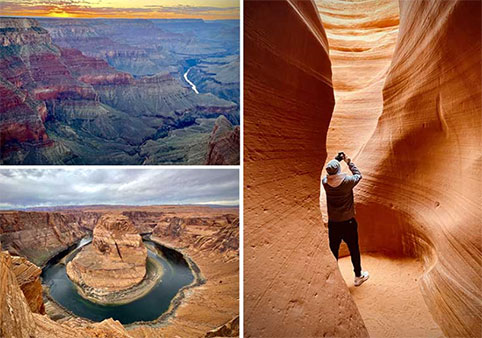
3 Day 2 Night Private Roundtrip Tour from Phoenix / Scottsdale
Tours from Phoenix
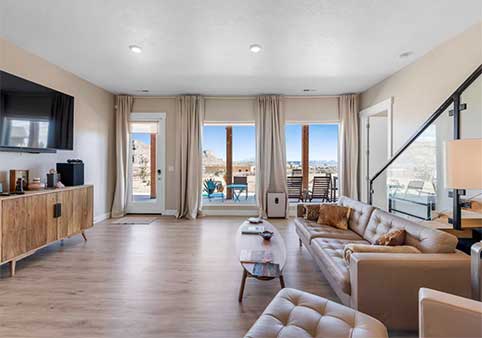
Lake Powell Sunrise Villa by Antelope Canyon
Firepits | Optimal Stargazing | Family-Friendly
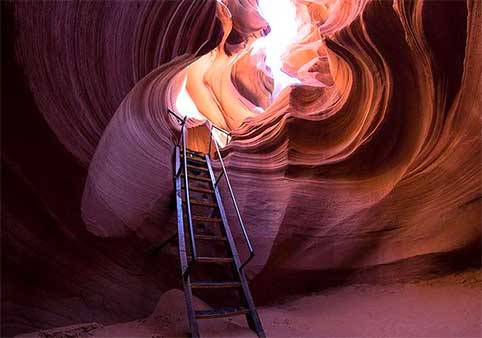
Small Group Antelope Canyon Day Trip from Phoenix
Benefit from a full-day tour from Phoenix to Antelope Canyon to see more of Arizona’s natural beauty. Take in Route 66, Flagstaff, the San Francisco Peaks, Lake Powell, and a Navajo Trading Post on the way to Antelope Canyon. Then explore Antelope Canyon with a Navajo guide, and see the … More
Benefit from a full-day tour from Phoenix to Antelope Canyon to see more of Arizona’s natural beauty. Take in Route 66, Flagstaff, the San Francisco Peaks, Lake Powell, and a Navajo Trading Post on the way to Antelope Canyon. Then explore Antelope Canyon with a Navajo guide, and see the Colorado River from the Horseshoe Bend Overlook. Meals and hotel pickup and drop-off are included. Choose between a small-group or private tour.
Tours from Phoenix
Maverick Helicopter Tours from Las Vegas
Tours from Las Vegas

Lake Powell Taxi Services
Private Tour | Custom Options Available | Native (Dine) Operated | Family-Friendly
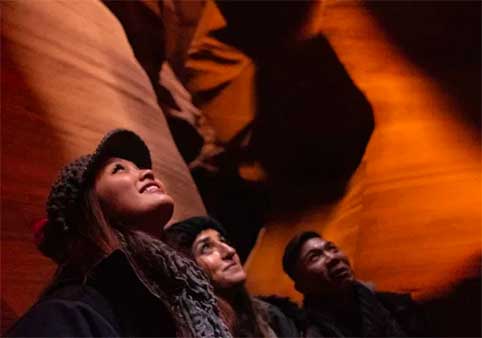
Antelope Canyon and Horseshoe Bend Tour
Tours from Flagstaff | Family-Friendly
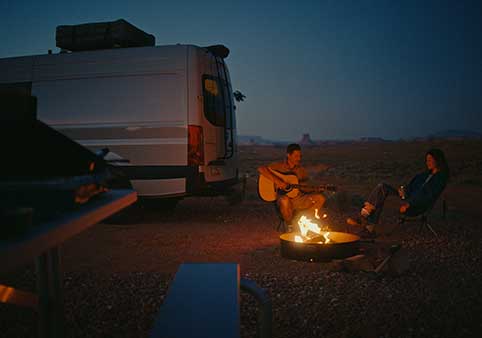
Roam America Horseshoe Bend
Pet-Friendly | Laundry | Firepits | Pool | Access to Trails | UTV Friendly | RV Campground | RV Sites | Cabins Rentals | On-Site Dining | General Store
Local Business Spotlight