Slot Canyons Near Page, Arizona
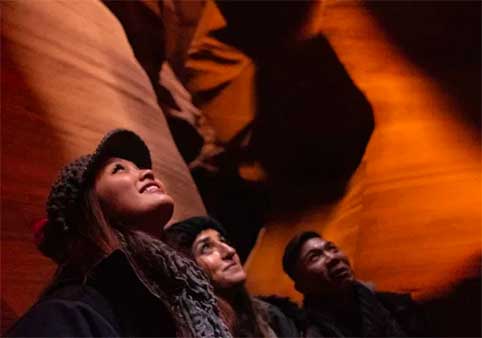
A slot canyon is a narrow passage carved through sandstone by flash floods. Water finds a crack in the rock, rushes through during storms, and over thousands of years widens the crack into a corridor that can be hundreds of feet deep and only a few feet wide. The walls are smooth and curved because the water scours them in a spiral motion. The color comes from iron oxide in the Navajo Sandstone, which ranges from pale orange to deep purple depending on the light.
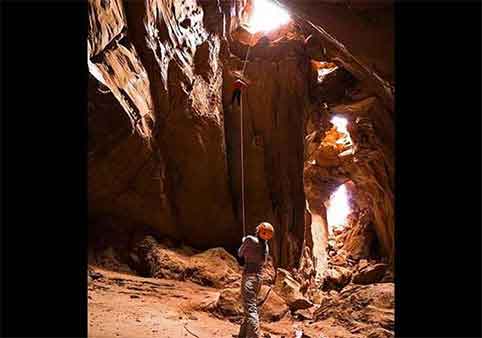
Slot canyons are not caves. They have no roof. Light enters from above through narrow openings, which creates the beams and reflected glow that photographers chase. They are also not safe places to be during rain. A dry slot canyon can fill with a wall of water in minutes if a storm hits the watershed upstream. The same narrow walls that make the canyon beautiful also make it a trap.
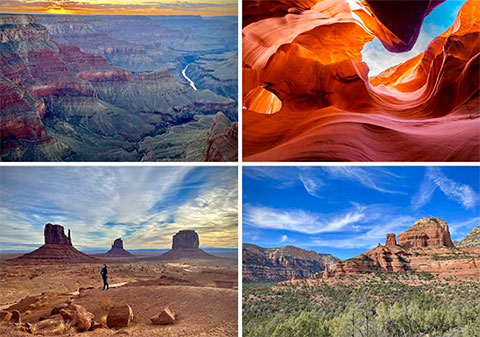
The Page area sits on some of the most concentrated slot canyon terrain in the world. Within an hour's drive you can find canyons ranging from flat, guided walks suitable for children to technical descents requiring ropes, harnesses, and canyoneering experience. The key is choosing the right canyon for your skill level, vehicle, and — most importantly — the weather.
Slot Canyons Near Page: A Comparison
| Canyon | Guide required | Physical demand | Flash flood risk | Distance from Page | Best for |
|---|---|---|---|---|---|
| Upper Antelope | Yes (Navajo) | Low | Moderate (managed) | 10 min | Light beams; those who cannot manage stairs |
| Lower Antelope | Yes (Navajo) | Moderate (stairs, narrow) | Moderate (managed) | 10 min | Most first-time visitors; better value |
| Canyon X | Yes (Taadidiin only) | Low–moderate | Moderate (managed) | 10 min | Photographers; avoiding crowds |
| Waterholes (Upper) | Yes (mandatory) | Moderate (ladders, squeezes) | Moderate (managed) | 5 min | Antelope Canyon alternative; tripods allowed |
| Waterholes (Lower) | Permit only | High (320' rappel, ropes) | High | 5 min | Experienced canyoneers only |
| Buckskin Gulch | No | Moderate–high (12–16 mi) | Extreme (no escape) | 1 hr | Experienced hikers with weather expertise |
| Peekaboo (Kanab) | No | Low (0.8 mi) | Lower (short narrows) | 1 hr | Families; short, easy slot experience |
Antelope Canyon
The most famous slot canyon in the world and the reason most people come to Page. It is actually a system of three main sections — Upper, Lower, and Canyon X — each with different access, physical demands, and price points. All require a Navajo guide. See our full Antelope Canyon guide for detailed booking, pricing, and physical requirements.
Waterholes Canyon
Waterholes Canyon is two different experiences divided by Highway 89. The upper section, east of the highway, is open only to guided tours operated by authorized Navajo guides. Since 2018, self-entry has been prohibited due to safety concerns and rescue incidents. The tour covers roughly 2 miles in 90 minutes, includes ladders and tight squeezes, and allows tripods on photography tours — something no longer permitted in Antelope Canyon. Children must be at least 8 years old.
The lower section, west of the highway, is a technical canyoneering route that requires a Navajo backcountry permit ($12–$15 per person), ropes, harnesses, and a 320-foot rappel. It ends at the Colorado River, which means you need a packraft or a pre-arranged boat pickup to exit. Multiple rescues have occurred here, including technical teams stranded at the rappel. The Navajo Nation requires gear inspection before issuing permits to verify you are qualified. Do not attempt this route without canyoneering experience and proper equipment. See our Waterholes Canyon guide for details.
Buckskin Gulch
Buckskin Gulch is the longest and deepest slot canyon in the Southwest. The narrows run continuously for roughly 14 miles, with walls up to 400 feet high and passages so narrow you must turn sideways to pass. It is also the most dangerous slot canyon in the region.
The danger is not the hiking — the terrain is mostly flat sand. The danger is the flash flood potential. Buckskin's catchment basin extends for miles upstream, meaning a thunderstorm 50 miles away, invisible from the trailhead, can send a wall of water through the canyon 8 to 12 hours later. Once you are inside the narrows, there is no escape for 14 miles. Flood debris marks the walls 30 to 40 feet above the canyon floor. In March 2023, a flash flood killed hikers in Buckskin Gulch and required a four-day helicopter rescue operation that extracted 18 people.
There is no closure system. No ranger will stop you from entering during a storm. The trailhead has warning signs, but the decision is yours. The rule is simple: if rain is in the forecast for the catchment basin, do not enter. Not "check the sky above the trailhead" — check the forecast for the entire watershed. If you are not comfortable assessing this risk, hire a guide or choose a different canyon.
Day-hiking permits are unlimited and self-serve at the trailhead. Overnight permits are scarce and must be obtained in advance. The standard day hike is from Wire Pass Trailhead to the confluence with Paria Canyon and back — roughly 6 miles round-trip. The full through-hike is 21 miles and requires a shuttle.
Peekaboo Slot Canyon (Kanab)
Peekaboo — also called Red Canyon on USGS maps — is a short, easy slot canyon about an hour north of Page near Kanab, Utah. The slot itself is only about 0.8 miles round-trip with minimal elevation gain. The catchment basin is small and visible from the approach road, which makes flash flood assessment easier than at Buckskin Gulch.
The challenge is getting there. The 4-mile road from the highway staging area to the canyon is deep sand. A high-clearance 4WD vehicle with experience driving in sand is required. All-wheel-drive crossovers and sedans regularly get stuck. If you do not have the right vehicle, you can hike the road — an 8-mile round-trip trudge through deep sand that most people find exhausting. Several Kanab-based tour operators offer guided trips in off-road vehicles.
Inside the canyon, you will find Moqui Steps — small hand and foot holes carved into the sandstone wall by Indigenous people who used them to climb out quickly. The canyon is dog-friendly, though there is one short ladder where you may need to lift your dog. Peekaboo is a good choice for families who want a slot canyon experience without the booking pressure of Antelope Canyon or the danger of Buckskin Gulch.
Flash Flood Safety: The Rules
Flash floods are the primary hazard in slot canyons. They kill more hikers in the Southwest than any other single cause. The following rules are not suggestions — they are the minimum standard for staying alive.
Rule 1: If rain is in the forecast, do not enter a slot canyon.
This applies even if the sky above the trailhead is blue. Slot canyons collect water from entire watersheds, which can be 50 miles or more upstream. A storm you cannot see can kill you.
Rule 2: Check the forecast for the entire watershed, not just the trailhead.
For Buckskin Gulch, this means checking weather for the entire Grand Staircase-Escalante region north of the canyon. For Antelope Canyon and Waterholes, the Navajo Nation tour operators monitor this and will cancel tours if necessary. For self-guided canyons, you are responsible for the assessment.
Rule 3: Understand that "20% chance of rain" is not safe.
A 20% chance of thunderstorms means it will be raining 100% of the time in 20% of the forecast area. During monsoon season (July–September), a single microburst can drop enough rain to trigger a flood. Do not rationalize your way into a canyon based on low probability numbers.
Rule 4: Morning is safer than afternoon.
Monsoon storms typically build between 1 p.m. and 4 p.m. If you are visiting a self-guided canyon during monsoon season, enter early and be out by noon.
Rule 5: Know the signs.
If you are in a canyon and notice the water level rising, the sound of rushing water increasing, or debris floating past, climb to higher ground immediately. Do not try to outrun the water — flash floods move at 4–6 mph and can reach 20 mph in steep terrain.
Rule 6: Do not enter a canyon if you are not prepared to self-rescue.
Cell service is nonexistent in most slot canyons. Rescue can take hours or days. If you are not comfortable with the risk, hire a guide or choose a managed canyon like Antelope Canyon where operators monitor weather and close the canyon when necessary.
Canyoneering vs. Slot Canyon Hiking
There is a meaningful difference between walking through a slot canyon and technical canyoneering.
Slot canyon hiking involves walking on sand or rock through a narrow passage. You may need to scramble over boulders or wade through shallow pools, but you do not need ropes or specialized equipment. Upper Antelope Canyon, Lower Antelope Canyon, Canyon X, Waterholes Upper, and Peekaboo all fall into this category.
Technical canyoneering involves rappelling down drops, using ropes and harnesses to descend cliffs, swimming through deep pools, and navigating obstacles that require climbing skills. Waterholes Lower and some sections of the Paria Canyon system require this level of skill. If you have never rappelled or do not know how to build an anchor, these routes are not for you.
Some tour operators in the Page and Kanab areas offer guided canyoneering trips for beginners. These trips provide all equipment and instruction. See our guided adventures page for current operators.
Frequently Asked Questions
What is a slot canyon?
A slot canyon is a narrow passage carved through sandstone by flash floods over thousands of years. The walls are smooth and curved, and the canyon can be hundreds of feet deep but only a few feet wide. Slot canyons are not caves — they are open to the sky at the top.
How dangerous are slot canyons?
The primary danger is flash flooding. A dry canyon can fill with a wall of water in minutes if a storm hits the watershed upstream. The narrow walls that make the canyon beautiful also make it a trap — there is often no way to escape once the water rises. In March 2023, a flash flood in Buckskin Gulch killed hikers and required helicopter rescue of 18 people.
What is the best slot canyon near Page, Arizona?
For most first-time visitors, Lower Antelope Canyon offers the best balance of accessibility, cost, and experience. For those who cannot get Antelope Canyon reservations, Waterholes Canyon (Upper) is a good alternative. For experienced hikers comfortable with weather assessment, Buckskin Gulch is the most spectacular — and most dangerous. For families with young children, Peekaboo near Kanab is the easiest.
Do all slot canyons require a guide?
No. Antelope Canyon, Waterholes Upper, and Canyon X require Navajo guides because they are on Navajo Nation land. Buckskin Gulch, Peekaboo, and most canyons in Grand Staircase-Escalante do not require guides, but you are responsible for your own safety — including weather assessment and self-rescue.
How do you check the weather before entering a slot canyon?
Check the National Weather Service forecast for the entire watershed, not just the trailhead. For Buckskin Gulch, this means checking weather for the Grand Staircase-Escalante region. Look for any mention of rain or thunderstorms in the 24-hour window before and during your planned hike. If there is any rain in the forecast, do not enter.
What should you wear in a slot canyon?
Closed-toe shoes are required for Antelope Canyon and strongly recommended for all others. Wear lightweight, dark-colored clothing for photography — bright colors reflect onto the walls. Avoid cotton in summer; it holds sweat and chafes. Bring layers — slot canyons are cooler than the surrounding desert in summer and can be below freezing inside in winter.
Can you visit a slot canyon in the rain?
No. This is the single most important safety rule. If rain is forecast for the watershed, do not enter. The 1997 flash flood in Lower Antelope Canyon killed eleven visitors. The 2023 Buckskin Gulch flood killed hikers. These events happen.
Are slot canyons cold inside?
In summer, slot canyons are cooler than the outside air because the narrow walls provide shade and trap cool air. In winter, they can be colder than the outside air because the sun does not penetrate deeply. Lower Antelope Canyon can drop below freezing inside during December and January. Dress in layers year-round.
What is canyoneering vs. slot canyon hiking?
Slot canyon hiking is walking through a narrow passage on foot. Canyoneering adds technical elements: rappelling down cliffs with ropes and harnesses, swimming through deep pools, and using climbing skills to navigate obstacles. Waterholes Lower and parts of Paria Canyon require canyoneering skills. Antelope Canyon, Peekaboo, and Buckskin Gulch (day hike) do not.
Can you take photos in slot canyons?
Yes, but rules vary by canyon. Tripods are banned in all sections of Antelope Canyon. Tripods are allowed on Waterholes Canyon photography tours. Personal photography is free. Commercial photography — images you plan to sell or publish for profit — requires a separate Navajo Nation permit on tribal land.
For specific tour booking, pricing, and availability, see our slot canyon tours page. For the full Antelope Canyon guide, visit Antelope Canyon. For Waterholes Canyon details, see Waterholes Canyon. For photography advice, visit our photography guide.
For the region's most famous slot canyon — and the one that requires the most advance planning — see our dedicated Antelope Canyon tours booking guide.
For photography tips specific to Antelope Canyon — the most photographed slot canyon in the world — see Antelope Canyon photo tips.
For where to stay when exploring the slot canyons near Page — all lodging is in town, not at the canyons — see Antelope Canyon hotels.
Slot Canyon Adventures in the Southwest
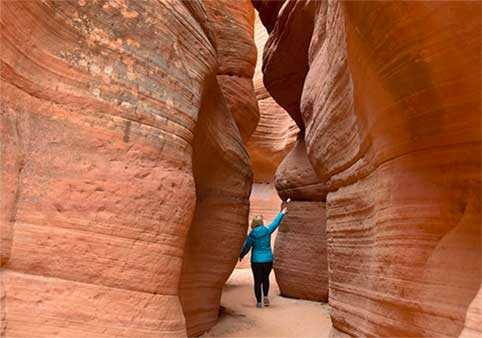
Peekaboo Slot Canyon
Guided Slot Canyon Trips
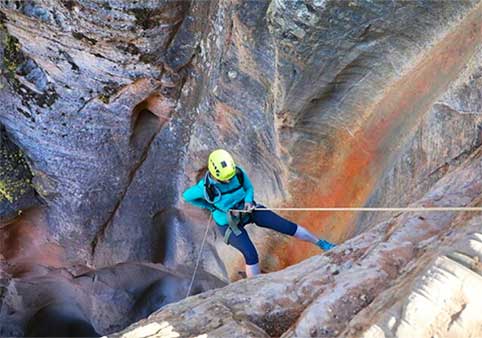
East Zion: Full-Day Canyoneering Adventure
Guided Slot Canyon Trips
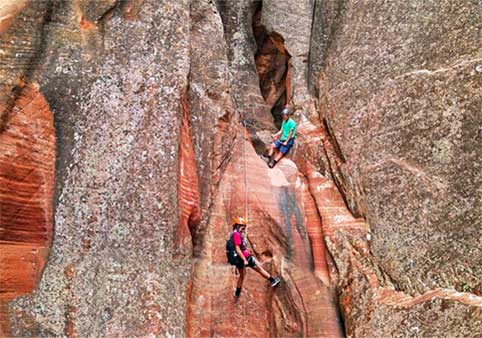
East Zion: Half-Day Canyoneering Tour
Guided Slot Canyon Trips
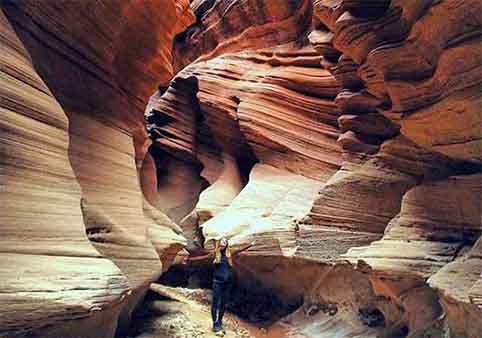
Buckskin Gulch Private Tour
Buckskin Gulch is one of the largest slot canyons and unless you know your way around, you may miss out on seeing some of the best parts of the canyon. This Buckskin Gulch Private Tour from Kanab takes you into the slot canyon with a guide who knows the greatest areas to take photos. Pl … More
Buckskin Gulch is one of the largest slot canyons and unless you know your way around, you may miss out on seeing some of the best parts of the canyon. This Buckskin Gulch Private Tour from Kanab takes you into the slot canyon with a guide who knows the greatest areas to take photos. Plus, you'll see some of the petroglyph rock writings from the early Archaic period.
Guided Slot Canyon Trips
Goblin Valley State Park Canyoneering Adventure
Guided Slot Canyon Trips
Local Business Spotlight