Colorado River Rafting Trips
The Colorado River below Glen Canyon Dam offers two completely different rafting experiences, and the distinction matters. Above Lees Ferry — the 15-mile stretch between the dam and the historic river crossing — the water is calm, emerald-green, and controlled by the dam's release gates. This is smoothwater rafting: no rapids, no paddling required, and suitable for children as young as four. Below Lees Ferry, the river enters Grand Canyon National Park and becomes one of the most famous whitewater runs on Earth, with rapids rated up to Class IV+ and trips that range from one day to eighteen.
For visitors staying in Page, the smoothwater section is the practical option. It is a half-day trip that departs from town, floats through Horseshoe Bend, and returns you to your hotel by mid-afternoon. The Grand Canyon section is a separate commitment — a multi-day expedition that requires advance planning, a licensed outfitter, and a willingness to camp on sand beaches for a week or more.
This page covers both. If you are looking for a family-friendly afternoon on the water, read the smoothwater section. If you are planning the trip of a lifetime through the Grand Canyon, read the multi-day section.
Smoothwater Rafting: Glen Canyon to Lees Ferry
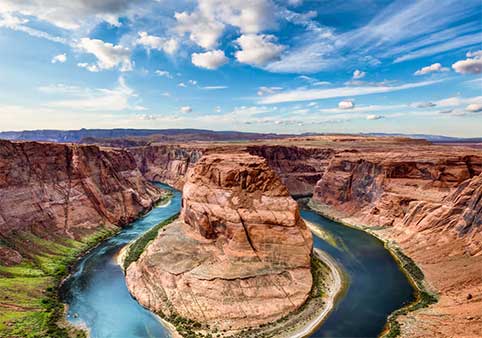
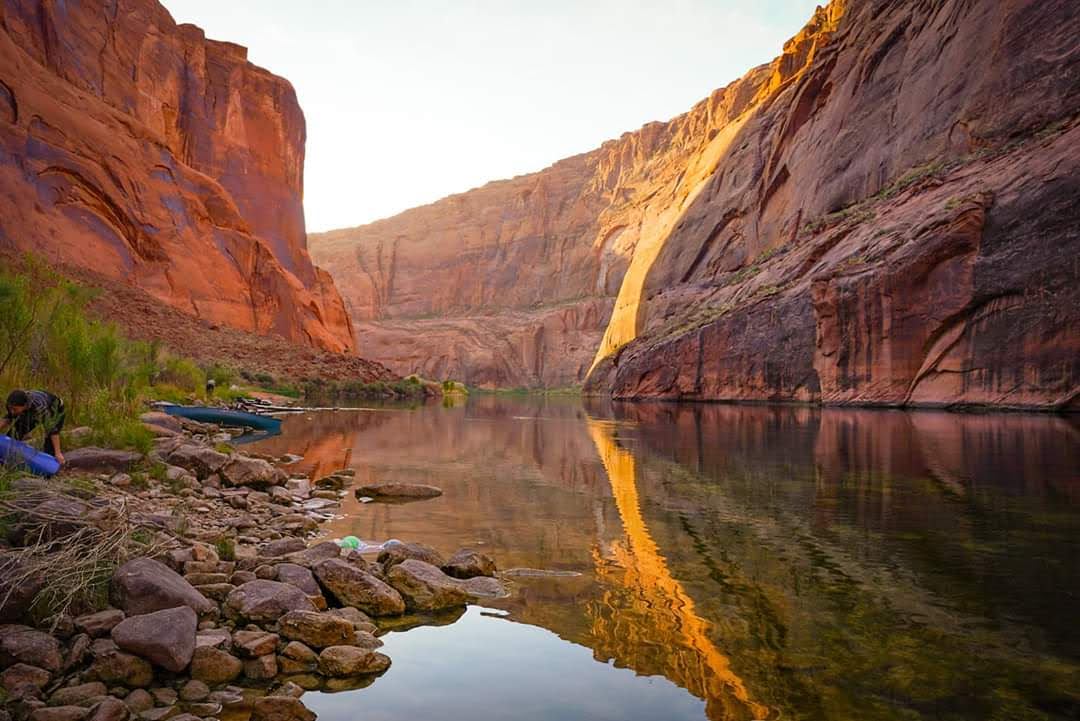
The 15-mile stretch of Colorado River from Glen Canyon Dam to Lees Ferry is technically Glen Canyon, not the Grand Canyon. The boundary is a map line at Lees Ferry — river mile 0 — but the scenery is continuous: towering red sandstone walls, the famous bend in the river at Horseshoe Bend, ancient petroglyphs, and water so clear it looks artificial. Because the water is released from the bottom of Lake Powell, it stays 46–56°F year-round and flows at a steady, predictable rate. There are no rapids. There are no rocks to navigate. The current moves you along at a walking pace.
This section is managed by the National Park Service as part of Glen Canyon National Recreation Area. A park entrance fee of $15 per person age 16 and older applies to all river users. An America the Beautiful pass covers this fee.
Half-Day Guided Motorized Raft Trip
The standard smoothwater experience is a half-day trip on a motorized pontoon raft. You meet in Page, board a bus for the 45-minute drive to Lees Ferry, and launch from the historic boat ramp. The raft motors upstream 10 miles to Petroglyph Beach, where you stop to view Ancestral Puebloan rock art and stretch your legs. From there, you float back downstream through the Horseshoe Bend section, passing beneath the 1,000-foot cliffs that make the overlook famous. The bus returns you to Page via Highway 89A, crossing the Navajo Bridge and passing the Vermilion Cliffs.
| Detail | Specification |
|---|---|
| Duration | 3.5 hours on the river; 5 hours total including transport |
| Distance | 10 miles (upstream by motor, downstream by float) |
| Season | March 15 – October 31 |
| Departure times | Spring/Fall: 8:00 a.m., 11:00 a.m. | Summer: 8:00 a.m., 11:30 a.m., 3:00 p.m. |
| Age minimum | 4 years |
| Physical effort | None — you sit on the pontoon raft and the motor does the work |
| Adult price | $129.00 |
| Child price (4–15) | $113.82 |
| Additional fees | $15/person park entrance fee (age 16+); 9.9% tax; gratuity not included |
| What is included | Round-trip bus from Page, backhaul boat ride upriver, motorized pontoon raft, guide narration, cold water and lemonade, USCG-certified life jacket (required for ages 12 and under, optional for adults) |
| What to bring | Hat, sunglasses, shoes that can get wet, sunscreen, light layers (spring/fall), shorts and light clothing (summer) |
| What is NOT included | Food, snacks, alcoholic beverages, hotel pickup, gratuity |
Booking: Reserve online through Wilderness River Adventures (the primary operator) or through third-party platforms like Viator and GetYourGuide. Prices are the same across channels. Book 1–2 weeks ahead in peak season; same-day availability is sometimes possible in shoulder season. Check in 45 minutes before departure. Cancellations within 48 hours are non-refundable.
Minimum passengers: The operator requires 8 full-fare passengers to run a trip. If the minimum is not met, the trip is cancelled and you receive a full refund or rescheduling option. This is most likely to affect early-season (March) and late-season (October) departures.
Weather policy: Trips run rain or shine. The operator cancels only for safety reasons — high winds, lightning, or extreme weather. Summer temperatures on the river reach 105°F; the water is cold but the air is hot. Spring and fall mornings can be chilly; bring a jacket and long pants.
Full-Day Row Trip
A full-day option is available for those who want more time on the water. This trip covers the full 15 miles from Glen Canyon Dam to Lees Ferry in a non-motorized row raft, guided by an oarsman. The pace is slower, the experience is quieter without the motor, and you have more time for photography, wildlife watching, and side exploration. The full-day trip is less commonly booked than the half-day and may have limited departure dates. Contact the operator directly for the current schedule.
Self-Guided Kayak and SUP Trips
For visitors who want to paddle at their own pace, self-guided kayak, canoe, and stand-up paddleboard trips are available on the same smoothwater section. You meet at Lees Ferry (roughly 45 minutes from Page), where a backhaul boat — a motorized shuttle — takes you and your vessel upriver to your chosen put-in point. From there, you paddle downstream with the current, stopping at beaches, petroglyphs, and side canyons as you choose.
| Trip Option | Distance | Time | Backhaul Cost | Vessel Rental |
|---|---|---|---|---|
| Half-Day Kayak | 10 miles (from Petroglyph Beach) | 4–5 hours | $75–$80/person | $35 single / $50 tandem kayak; $50 SUP; $80 canoe |
| Full-Day Kayak | 15 miles (from Kayak Beach near dam) | 7–9 hours | $75–$80/person | Same as above |
| 2-Day Overnight | 15 miles with camping | 2 days | $75–$80/person | Same as above + camping gear |
Backhaul details: The backhaul is a flat-rate motorized shuttle that ferries you and your vessel from Lees Ferry upriver to your put-in. It runs every 30 minutes from 7:00 a.m. to 1:00 p.m., March through October. You do not need a reservation for the backhaul itself, but you should reserve your vessel rental in advance. The backhaul fee is the same whether you paddle for 4 hours or camp for 2 nights.
What is included: Vessel, paddle, and life jacket. Backhaul shuttle. No guide — you are on your own.
What to bring: Plenty of water (1 gallon per person per day), food, sun protection, dry bags for electronics, and a plan. There is no cell service on the river. If you get into trouble, you cannot call for help. The current is gentle but steady — if you capsize, your gear will float downstream quickly.
Minimum age: 5 years for self-guided kayak trips.
Camping: Dispersed camping is permitted on sandy beaches along the river. No permit is required for overnight stays on this section. Camp above the high-water line and practice Leave No Trace. The maximum stay is 2 nights. Fires are permitted only in portable fire pans.
Bring your own vessel: You can bring your own kayak, canoe, or SUP and pay only the backhaul fee. Gear over 100 pounds may incur a surcharge. Inflatable vessels are common and work well on this section.
Multi-Day Grand Canyon Whitewater Rafting
Below Lees Ferry, the Colorado River enters Grand Canyon National Park and changes character completely. The calm, dam-controlled water of Glen Canyon gives way to 277 miles of whitewater rapids, side canyons, waterfalls, and some of the most remote wilderness in the continental United States. All multi-day trips through the Grand Canyon require a licensed commercial outfitter — private permits are available through a weighted lottery but are extremely difficult to obtain.
The National Park Service licenses 16 commercial outfitters to run trips from Lees Ferry to various take-out points. Each company offers different trip lengths, raft types, and philosophies. The cost is the same whether you book through the outfitter directly or through a broker like Rivers & Oceans.
Trip Types and Costs (2026–2027 Season)
| Trip Type | Route | Duration | Raft Style | Adult Price Range |
|---|---|---|---|---|
| One-Day Motor | Diamond Creek to Pearce Ferry (lower canyon) | 1 day | Motorized pontoon | ~$589 |
| Two-Day Overnight | Diamond Creek to Pearce Ferry | 2 days | Paddle then motor | Varies by operator |
| Upper Canyon | Lees Ferry to Phantom Ranch (or Whitmore Wash) | 5.5–8 days | Motor, oar, dory, or paddle | Motor: $1,930–$2,670 Oar/Dory: $2,605–$5,299 |
| Lower Canyon | Phantom Ranch to Diamond Creek | 4–12 days | Motor, oar, dory, or paddle | Motor: $2,325–$3,840 Oar/Dory: $3,590–$7,499 |
| Full Canyon | Lees Ferry to Diamond Creek (or Pearce Ferry) | 6–18 days | Motor, oar, dory, or paddle | Motor: $3,420–$5,185 Oar/Dory: $5,100–$9,999 All-Paddle: $5,660–$6,710 |
| Western Canyon | Whitmore Wash to Pearce Ferry | 3–4 days | Motor or oar | Motor: $1,750–$2,570 Oar: $2,530–$3,999 |
Note: Prices are per person and include all meals, camping equipment, guides, and river transport. They do not include transportation to Lees Ferry, pre- or post-trip lodging, gratuities, or optional helicopter exits. A $15/person National Park entrance fee applies. Prices current as of March 2026.
Raft Types Explained
Motorized pontoon rafts: Large, stable rafts with an outboard motor. They cover more miles per day, which means shorter trips for the same distance. The motor is loud and some purists dislike it, but it is the most efficient way to see the full canyon. Best for: travelers who want to cover maximum distance, those with limited vacation time, and anyone concerned about physical exertion.
Oar rafts: Smaller rafts propelled by a guide using oars. Slower than motor rigs but quieter and more intimate. The guide does all the rowing — you sit and hold on. Best for: travelers who want a quieter, more traditional river experience without the physical demands of paddling.
Dories: Hard-hulled wooden or fiberglass boats that look like oversized rowboats. Faster and more responsive than rafts, but less stable in big water. Dory trips are considered the most elegant and adventurous option. Best for: experienced river travelers and those who want the classic Grand Canyon dory experience.
Paddle rafts: Inflatable rafts where every participant paddles under the guide's direction. This is the most physically demanding and participatory option. You are actively involved in navigating every rapid. Best for: fit, adventurous travelers who want full immersion in the river experience.
What to Expect on a Multi-Day Trip
A typical day on the river begins early — guides wake the group at dawn for coffee and breakfast cooked on propane stoves. You break camp, load the rafts, and launch by mid-morning. The morning usually includes one or two rapids, followed by calm water where you can swim, nap, or watch the canyon walls scroll by. Lunch is a cold spread on a sandy beach — deli meats, cheeses, hummus, fresh vegetables. The afternoon brings more rapids, more scenery, and a stop at a side canyon for a hike. You make camp by late afternoon on a sand beach, set up your cot and sleeping bag, and gather for dinner as the canyon walls turn gold in the setting sun.
Rapids: Grand Canyon rapids are rated on a 1–10 scale, where 10 is the hardest runnable rapid and equivalent to Class IV+ on the international scale. The most famous rapids include Lava Falls (10), Crystal (8–10 depending on water level), and Hermit (8). Even the biggest rapids are manageable in the hands of experienced guides, but they are genuinely thrilling — you will get wet, the raft will buck, and you will feel the power of the river.
Side hikes: The hikes are a hidden highlight of any river trip. Guides lead walks up side canyons to waterfalls, granaries, rock art panels, and swimming holes. Some hikes are short and easy; others involve scrambling, wading, and route-finding. The side canyon water is often significantly warmer than the main river — a welcome relief from the 48°F Colorado.
Camping: You sleep on sand beaches under the canyon walls. The outfitter provides a cot, sleeping bag, tent (optional — many people sleep under the stars), and a waterproof dry bag for your personal gear. There are no toilets — the outfitter brings a portable toilet system and establishes a private grotto behind a tarp. Showers are river water in a bag with a nozzle. This is camping in the truest sense, and it is not for everyone.
Seasonality
Spring (April–May): Cool temperatures, wildflowers, and longer hiking days. Water levels are typically higher due to snowmelt. The tradeoff is cold nights and the possibility of strong up-canyon winds.
Summer (June–August): Hot — air temperatures range from 95°F to 115°F in the inner canyon. The river water stays cold (48–56°F at Lees Ferry, warming to 65°F near Diamond Creek), which provides relief. This is peak season and trips fill fastest. Monsoon thunderstorms in July and August can create flash floods in side canyons.
Fall (September–October): Mild temperatures, reliable weather, and fewer crowds than summer. The water level drops as dam releases decrease, which can make some rapids more technical. This is many guides' favorite season.
How to Book a Multi-Day Trip
Booking a Grand Canyon rafting trip requires advance planning — often a year or more. The 16 licensed outfitters release launch dates on a rolling schedule, and popular dates sell out within days. Here is the process:
- Decide on trip length and raft type. Motor trips are shorter and less physically demanding. Oar and dory trips are longer and quieter. Paddle trips are the most active.
- Choose a route. Full canyon (Lees Ferry to Diamond Creek) is the classic experience. Upper canyon only requires a hike out at Phantom Ranch. Lower canyon only requires a hike in at Phantom Ranch. Western canyon is the shortest option.
- Contact outfitters or a broker. You can book directly with any of the 16 licensed companies, or use a free broker service like Rivers & Oceans that checks availability across all outfitters. The price is the same either way.
- Reserve your spot. Most outfitters require a deposit of 20–30% at booking, with the balance due 60–90 days before launch. Cancellation policies vary — read carefully.
- Prepare physically. You do not need to be an athlete, but you should be comfortable with camping, hiking, and spending long days in the sun. The paddle raft option requires upper body strength and endurance.
The 16 licensed Grand Canyon commercial outfitters (2026–2033 contracts): Aramark-Wilderness River Adventures, Arizona Raft Adventures (AzRA), Arizona River Runners (ARR), Canyon Explorations/Canyon Expeditions, Canyoneers, Colorado River & Trail Expeditions, Grand Canyon Expeditions, Grand Canyon Whitewater, Hatch River Expeditions, Western River Expeditions, Moki Mac, Outdoors Unlimited, PRO River Outfitters, Sobek/MT Sobek, Tour West, and Wilderness River Adventures.
Water Temperature and What to Wear
The Colorado River below Glen Canyon Dam is cold — 46–56°F year-round at Lees Ferry, depending on the season and the depth of the water release from Lake Powell. The dam draws water from the bottom of the reservoir, which means the temperature stays consistent regardless of the air temperature. In summer, when the air reaches 105°F, the 48°F water feels shocking but refreshing. In spring and fall, when the air is mild, the water feels genuinely cold.
On smoothwater trips, you may get splashed but you will not be submerged. Wear quick-dry clothing and shoes that can get wet. Avoid cotton, which stays cold and heavy when wet. A light windbreaker is useful in spring and fall — the breeze on the river can be chilly.
On multi-day whitewater trips, you will get soaked in the rapids. Outfitters provide wetsuits or drysuits for spring and fall trips. In summer, many people wear swimwear and a sun shirt and let the rapids cool them off. The outfitter will provide a detailed packing list after you book.
How to Combine with Nearby Attractions
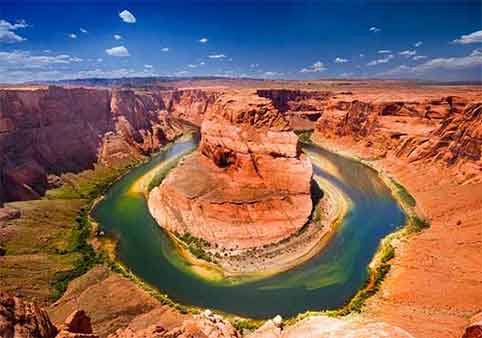
- Horseshoe Bend: The smoothwater float passes directly beneath the Horseshoe Bend overlook. Seeing the bend from river level is a completely different perspective than the cliff-top view. If you do the half-day raft trip, you do not need to also hike to the overlook — though many visitors do both for the contrast.
- Horseshoe Bend Float Trip: This is the same smoothwater section described above, marketed under a different name. If you are looking for the specific half-day trip page, see Horseshoe Bend float trip.
- Lees Ferry: The put-in for all river trips — smoothwater and whitewater. If you have time before or after your raft trip, the historic ferry crossing, Lonely Dell Ranch, and trout fishery are worth exploring.
- Glen Canyon Dam: The dam that creates the smoothwater section. The Carl Hayden Visitor Center explains how the dam controls river flow and water temperature. A good pre-trip stop.
- Lake Powell: The reservoir above the dam. If you want to experience the Colorado River system from both sides — the still water of the reservoir and the flowing water below the dam — pair a Lake Powell boat rental with a river float.
- Kayaking Lake Powell: For non-motorized water exploration on the reservoir side of the dam, see our kayaking guide.
- Three-day itinerary: The half-day smoothwater trip fits naturally on Day 2 of a Page itinerary, between Antelope Canyon (morning) and Horseshoe Bend (afternoon or evening). See our three days in Page guide for the full schedule.
Frequently Asked Questions
What is the difference between smoothwater rafting and whitewater rafting on the Colorado River near Page?
Smoothwater rafting takes place on the 15-mile section between Glen Canyon Dam and Lees Ferry. The water is calm, emerald-green, and released from the bottom of the dam at a steady rate. There are no rapids. Whitewater rafting begins below Lees Ferry in Grand Canyon National Park, where the river drops through rapids rated up to Class IV+. Smoothwater trips are half-day family excursions. Whitewater trips are multi-day expeditions.
How much does Colorado River rafting cost near Page?
Half-day smoothwater guided trips cost $129 for adults and $113.82 for children ages 4–15, plus a $15/person park entrance fee. Self-guided kayak trips cost $35–$80 for vessel rental plus $75–$80 for the backhaul shuttle. Multi-day Grand Canyon whitewater trips range from $1,750 for a 3-day western canyon motor trip to $9,999 for an 18-day full-canyon dory expedition.
Do you need experience to go rafting on the Colorado River near Page?
No experience is required for the smoothwater half-day trip. You sit on a motorized pontoon raft and the guide does everything. No paddling, no swimming, no rapids. For multi-day Grand Canyon trips, no prior rafting experience is required for motor or oar trips, but you should be comfortable with camping and long days outdoors. Paddle raft trips require physical fitness and a willingness to participate actively.
How cold is the Colorado River below Glen Canyon Dam?
46–56°F year-round at Lees Ferry. The dam releases water from the bottom of Lake Powell, which keeps the temperature consistent regardless of season. The water warms slightly as it flows downstream through the Grand Canyon, reaching 65°F near Diamond Creek in summer.
Can children go rafting on the Colorado River near Page?
Yes. The half-day smoothwater trip accepts children as young as 4. Self-guided kayak trips have a minimum age of 5. Multi-day Grand Canyon trips vary by operator and raft type — most accept children 8–12 and older, though some paddle trips have higher minimums. Check with your specific outfitter.
What is the best time of year to raft the Colorado River near Page?
For smoothwater trips, March through October is the operating season. Summer is hot but the cold river provides relief. Spring and fall are milder and less crowded. For multi-day Grand Canyon trips, April–May and September–October offer the best combination of comfortable temperatures, good water levels, and manageable crowds. June–August is peak season and hottest.
How far in advance should you book a Grand Canyon rafting trip?
Book 12–18 months ahead for full-canyon trips in peak season. Upper and lower canyon trips may have availability 6–12 months out. One-day and two-day lower canyon trips can sometimes be booked with a few weeks' notice. Smoothwater half-day trips require only 1–2 weeks of advance booking in peak season.
What should you wear for Colorado River rafting near Page?
For smoothwater trips: quick-dry clothing, shoes that can get wet (river sandals or old sneakers), a hat, sunglasses with a strap, and sunscreen. Avoid cotton. Bring a light jacket for spring and fall. For multi-day Grand Canyon trips, your outfitter will provide a detailed packing list after booking. Expect to bring layers, rain gear, and river shoes.
Is the Colorado River rafting trip near Page worth it?
The half-day smoothwater trip is one of the best-value activities in Page. For $129 plus the park fee, you get 3.5 hours on the river, a guide who explains the geology and history, a stop at ancient petroglyphs, and a view of Horseshoe Bend from water level. It is suitable for almost everyone and provides a perspective you cannot get from the overlook. For travelers considering a multi-day Grand Canyon trip, the smoothwater float is a good preview of river travel without the commitment.
Can you raft the Grand Canyon in one day from Page?
No. There is no one-day whitewater rafting trip that launches from Page or Lees Ferry. The only one-day Grand Canyon rafting option is a motor trip from Diamond Creek to Pearce Ferry in the lower canyon, which requires meeting in Peach Springs, Arizona — a 3.5-hour drive from Page. All multi-day trips launching from Lees Ferry require a minimum of 3 days (western canyon) to 18 days (full canyon).
What is the difference between a backhaul and a guided raft trip?
A backhaul is a motorized shuttle boat that takes you and your kayak, canoe, or SUP upriver from Lees Ferry to a put-in point. From there, you paddle downstream on your own. A guided raft trip includes the vessel, a professional guide, narration, and all logistics. The backhaul is for independent paddlers who want self-guided exploration. The guided trip is for visitors who want a relaxed, narrated experience without planning or effort.
Do you need a permit to kayak the Colorado River below Glen Canyon Dam?
No permit is required for self-guided kayaking on the smoothwater section between Glen Canyon Dam and Lees Ferry. You pay the National Park entrance fee ($15/person age 16+) and the backhaul shuttle fee. For the section below Lees Ferry (Grand Canyon), a permit is required for all river users — commercial trips include the permit; private trips require a separate permit obtained through the NPS lottery system.
For the specific half-day trip that departs from Page, see our Horseshoe Bend float trip page. For kayaking on the reservoir side of the dam, visit kayaking Lake Powell. For the historic put-in point, see Lees Ferry. For dam tours and visitor information, visit Glen Canyon Dam. For a complete activity list, see things to do in Page.
Many visitors combine Antelope Canyon with Horseshoe Bend in a single day. For the overlook visitor guide — including self-guided access, combo tours, and air tours — see Horseshoe Bend tours.
For a completely different kind of canyon experience — narrow sandstone slots instead of the wide river corridor — see slot canyon tours.
For motorized boat rentals on the reservoir above Glen Canyon Dam — a completely different water experience from river rafting — see boat rentals.
For an aerial view of the river you just rafted — including the full horseshoe curve from above — see air tours.
Local Business Spotlight