Lake Powell Houseboat Rentals
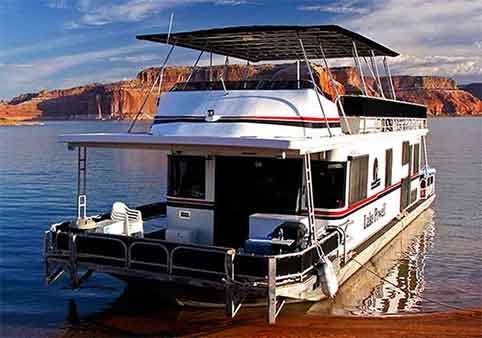
A Lake Powell houseboat combines lodging and transportation, but it is not a floating hotel with daily housekeeping, restaurants, and scheduled services. Renters are responsible for operating the boat, choosing campsites, managing fuel and water, handling waste, and responding to wind, weather, and changing lake levels.
For the right group, a houseboat can replace both a hotel room and a rental car. It works especially well for families, groups, and multi-day lake itineraries. The key is to book the correct boat for your group size, understand what is included, and leave enough time for orientation, provisioning, and slow travel between coves.
Renting a Houseboat on Lake Powell
Houseboats depart from developed marinas on Lake Powell, with Wahweap and Antelope Point serving the Page area. Current fleets include boats of different lengths, sleeping capacities, bathroom counts, and amenity levels. Some models are designed for smaller groups, while larger boats accommodate extended families or multiple couples.
Compare current houseboat inventory through these Page-area operators:
Do not choose by length alone. A larger boat may have more sleeping space, but it also uses more fuel, handles differently in wind, and may be harder to maneuver into a shallow cove. Match the boat to your group size, driving confidence, route, and budget.
Choosing a Houseboat and Marina
Start with the number of people who will sleep onboard, then compare bedrooms, bathrooms, kitchens, deck space, shade, and storage. Confirm both the overnight sleeping capacity and the maximum number of people allowed while the boat is underway. These numbers may not be the same.
Houseboat Size and Sleeping Capacity
Smaller boats can work for couples or small families, while larger groups usually need more than one sleeping room and more than one bathroom. Verify whether advertised sleeping capacity depends on sofa beds, convertible dinettes, top-deck pads, or additional air mattresses. Those arrangements may be acceptable for some groups and impractical for others.
Ask whether the boat includes a water slide, upper-deck shade, barbecue, ice maker, generator, air conditioning, filtered drinking water, or a depth finder. Amenities vary by model and are not guaranteed across an entire fleet.
The primary renter or designated captain must meet the operator’s age and licensing requirements. First-time renters receive an orientation, but orientation does not make a large houseboat easy to handle in wind, crowded marinas, or tight coves. Assign a sober, attentive driver and at least one spotter when visibility is limited.
Wahweap and Antelope Point Departure Bases
Wahweap is the main marina area near Page and is convenient for travelers staying in town before or after the trip. Antelope Point is east of Page and may suit groups staying on that side of the lake or using marina services there. Your rental contract determines where you must check in, provision, and depart; do not assume you can switch marinas after booking.
Factor in the drive from your Page lodging, luggage transfer, grocery loading, and the boat orientation. A pre-night hotel in Page can make an early houseboat departure less stressful. Compare lodging through where to stay in Page.
What Is Included in a Houseboat Rental
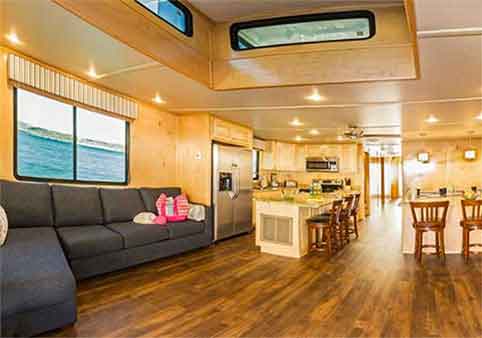
Most Lake Powell houseboat rentals include the boat, a basic kitchen, sleeping areas, bathroom facilities, linens, towels, and deck furniture. Fuel, food, drinks, ice, fishing licenses, personal gear, and optional powerboats are normally separate. Exact inclusions vary by operator and vessel.
Kitchen, Sleeping, and Deck Equipment
A typical houseboat kitchen includes cookware, dishes, utensils, a stove or range, and refrigeration. Confirm the refrigerator type, freezer space, and whether the boat has an ice maker. In hot weather, older refrigeration systems may struggle if the door is opened frequently or if the boat is not connected to adequate power.
Linens and bath towels are commonly provided, but personal items are not. Bring medications, sunscreen, hats, sunglasses, reusable water bottles, swimwear, warm layers, secure footwear, and dry bags for electronics. A headlamp is useful for moving around the boat after dark.
Ask about air conditioning, heating, generator use, and fuel costs for onboard power. Running air conditioning or other systems can add substantially to fuel use, particularly during hot summer nights.
Food, Ice, and Water Supplies
There are no restaurants or full grocery stores on the open lake. Plan every meal before departure, including breakfast, lunch, dinner, snacks, drinks, condiments, cooking oil, charcoal, propane if needed, trash bags, and cleaning supplies. Simple group meals reduce refrigerator demand and kitchen congestion.
Ice requires more planning than many first-time renters expect. Block ice lasts longer than cubed ice, but both take cooler space. Keep coolers shaded, minimize opening, and consider extra coolers for drinks. If your boat has a chest freezer or ice maker, confirm whether it is included and how it is powered.
Potable drinking water is another key check. Some boats have large freshwater tanks or filtered systems; others may not provide enough drinking water for the entire group. Bring a generous supply, especially during hot weather. Do not assume that water used for sinks or showers is intended for drinking.
Houseboat Itineraries and Water Levels
Houseboats travel slowly, and lake conditions can make progress slower than expected. Build the itinerary around time rather than mileage. A route that looks short on a map may involve long runs across open water, narrow channels, fuel stops, and difficult beach approaches.
Water level has a major effect on Lake Powell. Low water can expose rocks and old structures, change channel alignment, reduce beach size, and close or alter ramp and marina access. High water can create different challenges around debris and shoreline vegetation. Use current charts, follow buoys and markers, and reduce speed in unfamiliar coves.
Do not assume that a mid-lake fuel or supply stop will be available. Recent low-water conditions have reduced some Lake Powell services, including options that were once used for resupply. Confirm current fuel locations, floating restrooms, pumpout stations, and store hours before leaving the marina.
A realistic first trip often stays in the southern portion of the lake near the departure marina. Longer trips can reach more remote areas, but they require better fuel planning, more supplies, and more confidence in weather and navigation. Avoid planning an arrival at a new beach after dark.
For current marina conditions and broader lake planning, start with Lake Powell.
Powerboats, Water Toys, and Shore Excursions
A houseboat works well as a base, but it is not the fastest or most maneuverable way to explore every canyon. Many groups add a powerboat, jet ski, kayak, stand-up paddleboard, or other watercraft for day exploration. A smaller craft can reach narrow areas, check water depth before the houseboat enters a cove, and reduce the amount of houseboat fuel burned.
Compare current rental options through Lake Powell boat rentals. Confirm where the additional watercraft departs, whether it can be towed or trailered, how fuel is charged, and who is qualified to operate it.
Shore excursions can include swimming, fishing, beach camping, short hikes, and exploring accessible canyon mouths. Fishing from shore or from a smaller craft requires a valid license and current regulations. Review the Lake Powell fishing guide before bringing gear.
Be careful when going ashore. Lake Powell beaches may have thorny vegetation, uneven rock, wildlife, and changing waterlines. Wear secure footwear, carry water, and do not leave children or inexperienced swimmers unattended. Swimming is not allowed in marina areas.
Costs, Rules, and Safety
The rental rate is only part of the trip cost. Budget for fuel, park entrance fees, a houseboat service fee where applicable, food, ice, water, optional powerboats, damage protection or deposits, taxes, and any provisioning or delivery charges. Review cancellation and change policies carefully before booking.
Houseboat sewage must stay in the holding tank until it can be pumped out at an approved station. Do not discharge waste into Lake Powell. Shoreline camps require a sanitation plan and an approved portable toilet unless a toilet is available on the vessel or within the required distance. Review camping and RV information for shoreline-camping rules.
Every person onboard needs an appropriately sized life jacket. Children and weaker swimmers should wear them whenever they are on deck or in the water. Avoid glass containers, secure loose gear, and keep the swim platform clear when engines or generators are running because carbon monoxide can accumulate near the rear of the boat.
Monitor wind, thunderstorms, and heat before and during the trip. A houseboat is exposed to weather, and changing conditions can affect anchoring, beach selection, and the return route. Check Page weather and current lake alerts before departure.
Bring a current lake map, a charged phone or radio where useful, a basic first-aid kit, spare water, and backup lighting. Cell service is not reliable in every side canyon. Tell someone on shore where you plan to go and when you expect to return.
Frequently Asked Questions
Do you need boating experience to rent a Lake Powell houseboat?
First-time renters are common, and operators provide orientation. A houseboat is still a large motorized vessel. Confirm age, licensing, experience, and damage-protection requirements before booking.
How do you choose the right houseboat size?
Start with the number of overnight guests, then compare actual beds, bedrooms, bathrooms, refrigerator space, deck space, and storage. Do not rely only on the maximum occupancy number.
Is food included in a Lake Powell houseboat rental?
Usually not. Most rentals include kitchen equipment but not food, drinks, ice, or personal supplies. Provisioning services may be available, but they should be confirmed in advance.
What costs should you budget beyond the rental rate?
Budget for fuel, park entrance fees, food, ice, drinking water, powerboat or watercraft add-ons, service fees, taxes, and damage protection. Generator use can also increase fuel costs.
Can you bring pets on a Lake Powell houseboat?
Some rentals allow pets, but policies and fees vary by operator and vessel. Confirm the rules before booking and plan for shade, water, waste disposal, and safe movement around the boat.
Where do you get fuel and empty the holding tanks?
Fuel and pumpout services are available at developed marinas and designated on-lake locations when open. Verify current locations and hours because low water and seasonal operations can change availability.
Can you rely on mid-lake stores or fuel stops?
No. Do not assume a remote store, fuel stop, or former service location is open. Confirm current services before leaving the departure marina and carry enough fuel and supplies for your route.
What is the biggest first-time houseboating mistake?
Underestimating time, fuel, water, ice, and lake conditions. A houseboat moves slowly, and weather or low water can slow it further. Build a conservative route and avoid unfamiliar arrivals after dark.
Recommended Lake Powell Houseboat Rentals
Lake Powell Resorts & Marinas
Pet-Friendly
Lake Powell Houseboat Rentals
Antelope Point Marina
Local Business Spotlight