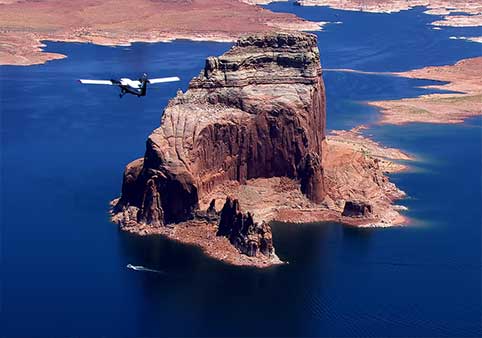
Photography Guide for Page, Arizona
The Page area is one of the most photographed regions in the American Southwest, but the rules and conditions have shifted significantly in recent years. Tripods have been banned in Antelope Canyon on standard tours since 2019. Drones are prohibited on all Navajo Nation land and at Glen Canyon National Recreation Area. The best light at Horseshoe Bend is late afternoon, not sunrise — a fact that surprises most first-time visitors. And the permit lottery for The Wave remains one of the most competitive in the National Park System.
This guide covers where to shoot, when to shoot, and how to work within the constraints. It is written for photographers who want useful shots, not for those trying to replicate exactly what they have seen on Instagram. The conditions inside a slot canyon change by the minute, and the light at Horseshoe Bend shifts by the season. Your best photographs will come from understanding those variables, not from copying someone else's settings.
Where to Photograph
| Location | Best time | Best for | Key restriction |
|---|---|---|---|
| Upper Antelope Canyon | 11 a.m.–1 p.m., late Mar–mid-Oct | Light beams, reflected color | No tripods on standard tours |
| Lower Antelope Canyon | Midday, year-round | Curves, texture, abstract compositions | No tripods on standard tours |
| Canyon X | Midday | Chamber compositions, fewer crowds | Photography tours allow tripods |
| Horseshoe Bend | 4:30–6:00 p.m. (Apr–Oct); 3:00–4:30 p.m. (winter) | River detail, warm sandstone tones | No drones; crowded at sunset |
| Lake Powell | Sunrise; late afternoon | Reflections, side canyons, split-level | Boat required for best access |
| White Pocket | Sunset; moonless nights | Abstract sandstone, Milky Way | 4WD required; no cell service |
| Monument Valley | Sunrise; sunset | Iconic buttes, long shadows | Navajo guide required for backcountry |
| Lees Ferry | Mid-October (Milky Way + mild temps) | River, bridge, dark sky | No drones |
Antelope Canyon: The Handheld Reality
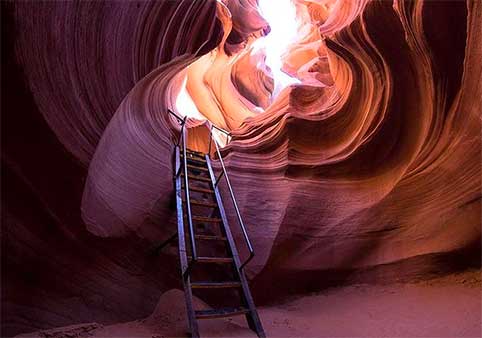
The most important fact about photographing Antelope Canyon is this: tripods, monopods, selfie sticks, and all camera support equipment have been banned on standard tours since 2019. This is not a suggestion — it is enforced by Navajo guides at the start of every tour. Your tripod will be left in the shuttle or at the staging area.
This ban fundamentally changed how photographers work in the canyon. The old advice — slow shutter speed, low ISO, tripod-mounted long exposure — no longer applies to standard tours. You are now shooting handheld, in a group of 8–13 people, with 30 to 45 minutes inside the canyon. There is no time for bracketed exposures or lens swaps.
Camera Settings for Handheld Shooting
DSLR / mirrorless: Set your aperture to f/2.8–f/4, ISO to 1600–6400, and shutter speed to 1/30–1/60 second. Modern image stabilization allows sharp handheld shots at these speeds. Do not be afraid of high ISO — the noise is manageable and preferable to motion blur.
Phone: Turn HDR on (the dynamic range inside the canyon is extreme). Use the ultrawide 0.5× lens for full chamber compositions. On iPhone 12+ or Pixel 6+, shoot in ProRAW or RAW for editing flexibility. Night mode works surprisingly well inside the canyon — the interior is dim enough that the phone's computational exposure compensates for handheld movement.
One-lens strategy: Bring one versatile zoom (24–70mm equivalent) and mount it before you enter. Do not change lenses inside the canyon — the fine sand will ruin your sensor.
Photography Tours That Still Allow Tripods
As of mid-year, two operators still run photography-specific tours with tripod permits:
- Taadidiin Tours (Canyon X): A 3-hour Photography Tour ($142 plus $15 permit fee) that allows tripods and caps groups at roughly 10 people. This is the best option for photographers who want tripod access in a slot canyon without the Antelope Canyon crowds.
- Adventurous Antelope Canyon Tours: A Night Photography Tour ($285) in Upper Antelope after sunset, and a 3 Canyon Photography Tour ($385) covering Mountain Sheep, Rattlesnake, and Owl Canyons. These book through FareHarbor.
Standard tours at Upper and Lower Antelope Canyon remain handheld-only. Any operator advertising a "photography tour" without specific tripod language is using marketing-speak for a standard sightseeing tour.
Light Beams
The famous vertical light beams only appear in Upper Antelope Canyon, and only when the midday sun is high enough to shine straight through the narrow ceiling openings. The window is roughly 11 a.m. to 1 p.m., late March through mid-October. Outside this window, the canyon is still photogenic — you will get reflected light and saturated color — but the beams do not form. Lower Antelope Canyon does not produce vertical beams due to its structural geometry.
Horseshoe Bend: When the Light Actually Works
The single biggest mistake photographers make at Horseshoe Bend is arriving at sunrise. It feels intuitive — cooler temperatures, fewer people, "golden hour" light — but the geometry of the bend works against you. In the morning, the sun is behind you as you face the overlook, which lights the far cliff walls but drops the river into deep shadow. The classic photograph — a turquoise-green ribbon of water curving around a glowing butte — requires the river to be lit from the side, which only happens in late afternoon.
The sweet spot: Roughly 4:30 to 6:00 p.m. from April through October, and 3:00 to 4:30 p.m. in winter. During this window, the sun is low enough to light the river surface without putting the entire bend into shadow. The sandstone warms to orange and red tones. Before this window, the river is in partial shadow. After, the whole scene goes flat as the sun drops behind the western cliff.
Composition: A wide-angle lens is essential — 16mm on full-frame or 10mm on APS-C — to capture the full sweep of the bend. For sun stars as the sun touches the horizon, use an aperture of f/14 or smaller. Be aware that the rim is crowded at sunset, and the unfenced areas require careful footing. Do not step backward for a photo without checking what is behind you.
Lake Powell and Water Photography
Lake Powell offers opportunities that the slot canyons and overlooks do not: reflections, split-level shots, and access to side canyons that can only be reached by boat.
Split-level photography: If you are kayaking or swimming, use a waterproof camera or housing. Set your aperture to f/8 or higher to keep detail both above and below the waterline. In deeper water, switch to a larger aperture (f/2.8) and shoot while moving — the water rushing over the lens creates a wave-like foreground effect.
Side canyons: The best light in Lake Powell's finger canyons is early morning, when the sun is low enough to penetrate the narrow openings but not so high that it blows out the highlights. Midday light inside the canyons is harsh and contrasty. Bring a polarizing filter to cut glare off the water surface.
Practical gear: A dry bag is essential for boat and kayak photography. Electronics do not survive immersion in Lake Powell. Dry bags are available for rent at the marinas, but bringing your own is cheaper and more reliable.
White Pocket and Remote Landscapes
White Pocket is a section of Navajo sandstone in Vermilion Cliffs National Monument, roughly 1.5 hours from Page. It requires no permit and no lottery — unlike The Wave — but it does require a high-clearance 4WD vehicle or a guided tour. The final approach involves several miles of deep sand that routinely strands purpose-built 4WD trucks. Cell service is nonexistent. A tow can cost over $1,000.
The photographic subject is a compact area — roughly 1,500 feet long by 500 feet wide — filled with brain-like white sandstone formations, swirling red-and-white patterns, and dramatic ridges. The terrain is open and walkable, not a trail hike. You can cover the main compositions in 2 to 3 hours.
Best light: Sunset is ideal — the low-angle light rakes across the textured sandstone and brings out the red tones. For night photography, White Pocket has a Bortle 1 classification — the darkest possible sky ranking — making it one of the best Milky Way locations in the region. The compact area means you can shoot multiple compositions in a single night without hiking far in the dark.
The Wave and Coyote Buttes
The Wave is the most famous sandstone formation in the Southwest, and the permit lottery reflects that. The Bureau of Land Management issues only 64 permits per day: 48 through an online advance lottery and 16 through a daily in-person lottery at the Kanab visitor center. Success rates are low — often less than 5 percent for the online lottery during peak season.
If you do not win a permit, White Pocket is the closest alternative — similar geology, no permit, and arguably more varied compositions. The New Wave, near Page, is a smaller, easier-access alternative with no permit required.
Night Sky and Milky Way Photography
The Page area has excellent dark sky potential, though not all locations are equally dark. Lake Powell's marinas generate light pollution that affects shoreline shooting. For the darkest skies, you need to get away from town and marina lights.
Best locations:
- White Pocket: Bortle 1 — the darkest possible. No light pollution. The Milky Way core is visible from late spring through early fall.
- Lees Ferry: Dark and remote, with the Navajo Bridge as a foreground element. Best in mid-October when temperatures are mild and the Milky Way's core is still visible.
- Lake Powell (away from marinas): Houseboats anchored in remote coves provide a stable platform for night photography with minimal light pollution.
- Horseshoe Bend: The bridge is lit at night, which creates an interesting foreground, but the parking lot lights and highway traffic reduce sky quality.
Milky Way timing: The galactic core is visible from roughly late March through early November. The best months are April through September, when the core is high in the sky during the darkest hours. Check a moon phase calendar — you want a new moon or a moon that sets before midnight. A bright moon washes out the Milky Way.
Camera settings: ISO 3200–6400, aperture wide open (f/2.8 or faster), shutter speed 15–25 seconds depending on focal length. Use the 500 rule to avoid star trails: divide 500 by your focal length to get your maximum shutter speed in seconds. A sturdy tripod is essential — this is one place where you definitely want one.
Permits and Restrictions
- Tripods: Banned on standard tours in all sections of Antelope Canyon since 2019. Photography-specific tours at Canyon X and with Adventurous Antelope Canyon Tours are the exceptions.
- Drones: Prohibited on all Navajo Nation land (Antelope Canyon, Monument Valley, Waterholes Canyon) and at Glen Canyon National Recreation Area (Horseshoe Bend, Lake Powell, Glen Canyon Dam). Confiscation and fines are possible.
- Flash: Not technically banned in Antelope Canyon, but strongly discouraged. Flash kills the warm sandstone tones that make the canyon iconic. There is no reason to use it.
- Commercial photography: If you plan to sell or license images taken on Navajo Nation land, you need a separate commercial photography permit from the Navajo Nation. This applies to stock photography, advertising, and editorial use for profit. Personal photography and social media posting do not require a permit.
- White Pocket: No permit required for day visits. Commercial photography and large groups may require BLM approval. As of late 2024, the BLM is considering a $10 day-use fee.
Gear Recommendations
For Antelope Canyon: One versatile zoom lens (24–70mm equivalent), fully charged batteries, a microfiber cloth for sand, and a phone with HDR and RAW capability. Leave the tripod at the hotel unless you have booked a photography-specific tour.
For Horseshoe Bend: Wide-angle lens (16mm or wider on full-frame), polarizing filter, and a headlamp if you are staying past sunset. The walk back to the parking lot is in the dark.
For Lake Powell: Waterproof camera or housing, dry bag, polarizing filter, and a lens cloth. The combination of water, sand, and sun is hard on gear.
For night photography: Sturdy tripod, fast wide-angle lens (f/2.8 or faster), red-light headlamp (to preserve night vision), and spare batteries. Cold nights drain batteries faster than expected.
For White Pocket: Wide-angle and telephoto lenses — the formations work at both scales. A tripod for sunset and night shots. A dust blower for sand.
Frequently Asked Questions
What is the best time to photograph Horseshoe Bend?
Late afternoon: roughly 4:30 to 6:00 p.m. from April through October, and 3:00 to 4:30 p.m. in winter. This is when the sun lights the river surface and warms the sandstone. Sunrise is the most common mistake — the river drops into deep shadow.
Can you bring a tripod into Antelope Canyon?
No, on standard sightseeing tours. Tripods have been banned across all three sections (Upper, Lower, Canyon X) since 2019. Photography-specific tours at Canyon X with Taadidiin Tours and night photography tours with Adventurous Antelope Canyon Tours still allow tripods. Book these directly if tripod access is essential.
What camera settings work best in Antelope Canyon?
For handheld shooting on standard tours: f/2.8–f/4, ISO 1600–6400, 1/30–1/60 second. For phones: HDR on, ultrawide lens, ProRAW or RAW mode. Do not use flash — it kills the warm tones.
When is the best time for Milky Way photography near Page?
The galactic core is visible from late March through early November, with the best months being April through September. You need a moonless night — check a moon phase calendar. White Pocket and Lees Ferry are the darkest locations.
Do you need a permit to take photos in Antelope Canyon?
Personal photography is allowed on all standard tours with no additional permit. If you plan to sell, license, or use images for commercial purposes, you need a separate commercial photography permit from the Navajo Nation.
Can you fly a drone at Horseshoe Bend or Antelope Canyon?
No. Drones are prohibited on all Navajo Nation land and at Glen Canyon National Recreation Area. This includes Antelope Canyon, Horseshoe Bend, Lake Powell, and Glen Canyon Dam.
What lens should I bring to Page, Arizona?
A 24–70mm zoom for Antelope Canyon, a 16–35mm wide-angle for Horseshoe Bend and Lake Powell, and a fast wide-angle prime (14mm f/2.8 or similar) for Milky Way photography. One lens is enough for Antelope Canyon — do not swap lenses inside the canyon due to sand.
Is a phone camera enough for Antelope Canyon?
Yes. Modern phones with HDR, ultrawide lenses, and RAW capture produce excellent results in the canyon's low light. The computational photography in recent iPhones and Pixel phones often outperforms older DSLRs with mediocre lenses in these conditions.
What should I wear for photography in slot canyons?
Dark, neutral clothing — black, navy, or dark gray. Bright colors reflect onto the canyon walls and show up in photographs. White and red are the worst offenders. This matters because the narrow walls act like reflectors.
Where are the best sunset photography spots near Page?
Horseshoe Bend (late afternoon), White Pocket (sunset), Lake Powell shoreline (sunset reflections), and Monument Valley (sunset at the Mittens). Each offers different light geometry and foreground elements.
For specific Antelope Canyon photography advice, see our Antelope Canyon photo tips page. For the full Antelope Canyon visitor guide, visit Antelope Canyon. For night sky locations, see our stargazing guide. For White Pocket access, see our White Pocket guide.
For sunrise and sunset photography at Horseshoe Bend — including the best times, safety tips, and guided photo tours — see Horseshoe Bend tours.
For canyon-specific photography advice — including the only remaining tripod-permitted tours and how to capture light beams without a tripod — see Antelope Canyon photo tips.
For photography-specific slot canyon tours — including the only remaining tripod-permitted experiences and night photography options — see slot canyon tours.
For aerial photography opportunities — including sunrise helicopter flights and the exclusive Tower Butte landing — see air tours.
Local Business Spotlight