Stargazing Near Page, Arizona
The Page area has some of the darkest skies in the continental United States. The town is small — roughly 7,500 people — and surrounded by hundreds of square miles of desert, canyon, and Navajo Nation land with virtually no artificial light. On a clear, moonless night, the sky is dense with stars. Lake Powell's marketing material claims up to 15,000 stars are visible, which is plausible under ideal conditions. The Milky Way core is visible from late February through October, with the best viewing from May through August.
The catch is that most visitors do not plan for night sky viewing. They come for Antelope Canyon and Horseshoe Bend, shoot those during the day, and are back in their hotel by 9 p.m. If you make even a small effort to get away from the hotel parking lot lights, the reward is a sky most people from cities have never seen.
Where to Stargaze
White Pocket
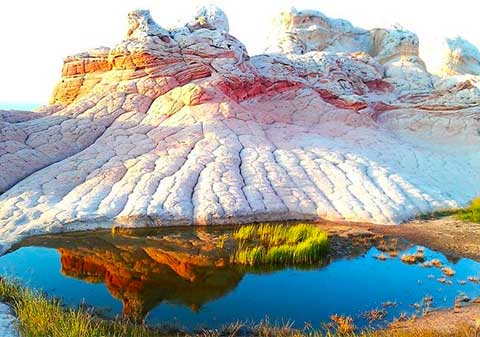
The darkest location near Page. White Pocket has a Bortle 1 classification — the darkest possible ranking on the light pollution scale. There are no towns, no highways, and no light sources for miles. The Milky Way rises directly above the brain-like sandstone formations, making for some of the most distinctive astrophotography compositions in the Southwest. The tradeoff is access: you need a high-clearance 4WD vehicle or a guided tour to reach it, and the road is impassable when wet. See our White Pocket guide for access details.
Horseshoe Bend
The City of Page occasionally hosts free stargazing events at the Horseshoe Bend parking lot, with the parking fee waived for night sky and telescope viewing. The overlook itself is open 24 hours, and the bridge over Highway 89 is lit at night, which creates an interesting foreground element for wide-angle shots. The downside is light pollution from Page itself, which is visible to the north, and from passing traffic on the highway. For pure sky quality, drive a few miles farther from town.
Lake Powell Shoreline
The marinas at Wahweap and Antelope Point generate enough light to affect shoreline viewing, but if you drive to Lone Rock Beach or find a remote pullout along the reservoir, the sky opens up. The water can create mirror reflections of the stars on calm nights, which doubles the visual impact. Houseboats anchored in remote coves away from marina lights offer some of the best stargazing platforms on the lake — you are literally sleeping on the water under the stars.
Lees Ferry
The historic river crossing forty minutes southeast of Page is remote, dark, and has the Navajo Bridge as a foreground element for night photography. The area is also historically significant — the bridge was a major engineering feat when completed in 1929. Mid-October is ideal here: the Milky Way core is still visible, temperatures have dropped from summer highs, and the monsoon season has ended.
Rainbow Bridge Area
Rainbow Bridge National Monument was designated an International Dark Sky Place in 2018. The monument itself is accessible only by boat or multi-day hike, but the surrounding Glen Canyon National Recreation Area has extensive dark shoreline. If you are on a houseboat or camping in a remote cove in the Forbidding Canyon area, the sky quality is exceptional.
Glen Canyon National Recreation Area
The vast, unpopulated stretches of Glen Canyon NRA offer multiple pullouts and overlooks where you can park and set up a tripod without another vehicle in sight. The key is to get off the main highway and find a spot with a clear southern horizon — the Milky Way core rises in the southeast and arcs across the southern sky.
| Location | Darkness | Access | Best for |
|---|---|---|---|
| White Pocket | Bortle 1 (excellent) | 4WD or guided tour only | Astrophotography; Milky Way + foreground |
| Horseshoe Bend | Moderate (town glow north) | Paved road; 24-hour access | Casual stargazing; bridge foreground shots |
| Lake Powell (remote shore) | Good to excellent | Car or boat required | Reflection shots; houseboat camping |
| Lees Ferry | Good | Paved road; 40 min from Page | Night photography with bridge foreground |
| Rainbow Bridge area | Excellent | Boat or multi-day hike | Dark sky purists; houseboat trips |
When to Go
Milky Way Season
The galactic core — the bright, photogenic center of the Milky Way — is visible from late February through October in the Northern Hemisphere. The season breaks down as follows:
- February–March: Core rises just before dawn. You need to be outside between 3:00 and 5:00 a.m. Early season, low on the horizon.
- April–May: Core rises around midnight. The season opens for reasonable evening viewing. May is when most photographers start planning trips.
- June–July: Peak season. The core is visible from shortly after sunset until the early morning hours. July offers the highest core altitude and longest viewing window.
- August: Still excellent. The core is high in the southwest at nightfall and sets by midnight.
- September–October: The core is visible in the early evening and sets by 11 p.m.–midnight. Early October is the last reliable window for most locations. By late October, the core is gone for the season.
- November–January: The core is not visible. The winter sky still has bright stars, constellations, and the Orion Nebula, but not the Milky Way band that most people associate with desert astrophotography.
Moon Phase
The moon is the enemy of stargazing. A full moon is roughly 40,000 times brighter than the brightest stars and washes out the Milky Way entirely. You want to plan your stargazing within 3 to 5 days of the new moon — when the moon is below the horizon or a thin crescent that sets early.
Key new moon dates for Milky Way viewing near Page:
- March — early morning core, pre-dawn shoots
- April — midnight core, improving window
- May — solid evening conditions begin
- June — peak season starts
- July — best month of the year for Milky Way photography
- August — excellent, though core sets earlier each night
- September — last reliable window
Check a moon phase calendar or use an app like PhotoPills to confirm the exact new moon date for your travel month.
Temperature
Desert nights are cold, even in summer. The temperature drops 30 to 40 degrees from the daytime high. A July day that reaches 100°F will cool to the mid-60s by midnight. In winter, nights drop below freezing. Bring a jacket, warm hat, and gloves regardless of season. If you are lying on the ground or sitting in a camp chair for an hour, you will get cold.
What You Can See
With the naked eye: On a moonless night at a dark site like White Pocket, you can see the full Milky Way band arching across the sky, thousands of individual stars, satellites passing overhead, and the Andromeda Galaxy as a faint smudge. The planets — Venus, Jupiter, Mars, Saturn — appear as bright, non-twinkling points of light.
With binoculars: The Orion Nebula, star clusters like the Pleiades, and the moons of Jupiter become visible. Binoculars are the most underrated stargazing tool — they magnify enough to reveal detail but are wide enough to preserve context.
With a telescope: Saturn's rings, Jupiter's cloud bands, the craters of the moon, distant galaxies, and nebulae. Telescopes are not necessary for a satisfying stargazing experience, but they add depth if you have access to one.
Meteor showers: The Perseids in mid-August are the most reliable annual shower visible from Page, with up to 60 meteors per hour under dark skies. The Geminids in mid-December are also excellent, though cold. The Quadrantids in early January are brief but intense.
Photography Tips
Camera settings: ISO 3200–6400, aperture wide open (f/2.8 or faster), shutter speed 15–25 seconds. Use the 500 rule to avoid star trails: divide 500 by your focal length to get your maximum exposure time in seconds. A 20mm lens can shoot for 25 seconds; a 50mm lens should stay under 10 seconds.
Tripod: Essential. There is no way to shoot the Milky Way handheld.
Headlamp: Use a red-light headlamp to preserve your night vision. White light ruins your dark adaptation for 20–30 minutes.
Light pollution from your own gear: Turn off your phone screen or use a red filter app. The light from a single phone screen can ruin a long exposure for everyone nearby. Do not shine flashlights at the horizon where others are shooting.
Foreground: The best Milky Way photos include an interesting foreground — sandstone formations, a lone tree, the Navajo Bridge, or the curve of Lake Powell. Scout your composition during the day so you are not fumbling in the dark.
Guided Stargazing Options
Ligai Si Anii Stargazing Night Tour: A Navajo-guided tour into the Antelope Slot Canyon Valley. The tour combines astronomy with Indigenous storytelling about the stars and constellations. Guides lead visitors to secluded spots with minimal light pollution. This is a good option if you want cultural context along with the sky viewing.
Under Canvas Lake Powell – Grand Staircase: The first DarkSky-certified lodging property in the world. The camp offers guided stargazing, telescopes, star parties, and "Stargazer Tents" with transparent panels for sleeping under the stars. Located roughly 45 minutes from Page.
Self-guided: Most stargazing near Page is free and self-directed. Drive to any of the locations listed above, set up a chair or blanket, and look up. No reservation, guide, or fee required.
Practical Considerations
- Temperature: Bring warm layers. Desert nights are cold year-round.
- No facilities: Most stargazing spots have no restrooms, water, or trash cans. Plan accordingly.
- Cell service: Spotty or nonexistent at remote locations like White Pocket and Lees Ferry. Download offline maps before you go.
- Safety: Remote desert at night has risks: getting lost, vehicle breakdown, wildlife encounters. Let someone know where you are going and when you plan to return. Carry extra water, a flashlight, and a charged phone.
- Snakes and scorpions: Both are present in the Page area but are not active in cold weather. In summer, use a flashlight to check your immediate area before sitting or lying down. Encounters are rare but possible.
- Wind: Spring nights can be windy, which makes long-exposure photography difficult. Check the forecast and secure your tripod.
Frequently Asked Questions
Where are the best places to stargaze near Page, Arizona?
White Pocket (Bortle 1, darkest possible), remote Lake Powell shoreline away from marina lights, Lees Ferry, and the Rainbow Bridge area. Horseshoe Bend is accessible but has some light pollution from Page.
Can you see the Milky Way from Page, Arizona?
Yes. The Milky Way core is visible from late February through October, with the best viewing from May through August. You need a moonless night and a location away from town lights.
What is the best time of year for stargazing near Page?
May through August offers the longest Milky Way viewing windows and warmest nights. September and October are also good, with the Milky Way visible in the early evening. Winter has the darkest skies but no Milky Way core and freezing temperatures.
Is Page, Arizona a dark sky location?
Page itself is a small town with moderate light pollution, but the surrounding desert is exceptionally dark. Rainbow Bridge National Monument, 50 miles up Lake Powell, is an International Dark Sky Place. Under Canvas Lake Powell – Grand Staircase is the world's first DarkSky-certified lodging property.
Do you need a telescope to stargaze near Page?
No. The naked eye can see thousands of stars and the full Milky Way band under dark skies. Binoculars reveal star clusters and Jupiter's moons. A telescope adds detail but is not required for a satisfying experience.
How cold does it get at night near Page, Arizona?
The temperature typically drops 30 to 40 degrees from the daytime high. A summer day that reaches 100°F will cool to the mid-60s by midnight. Winter nights drop below freezing. Bring warm layers regardless of season.
Can you stargaze from Lake Powell?
Yes. The remote shoreline and houseboat coves away from marina lights offer excellent dark skies. The water can create mirror reflections of the stars on calm nights. Avoid the immediate marina areas, which have light pollution.
Are there guided astronomy tours near Page, Arizona?
Yes. The Ligai Si Anii Stargazing Night Tour offers Navajo-guided astronomy with Indigenous storytelling. Under Canvas Lake Powell offers guided stargazing, telescopes, and star parties at their DarkSky-certified camp.
For photography-specific night sky advice, see our photography guide. For White Pocket access, visit our White Pocket guide. For Lake Powell shoreline camping, see camping and RV. For general Page-area planning, visit things to do.
For daytime photography tips in the Page area — including how to photograph the famous slot canyons — see Antelope Canyon photo tips.
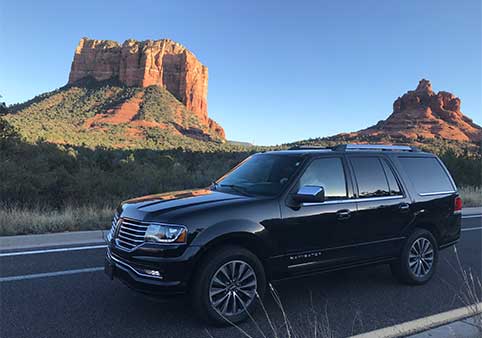
Arizona Private Tours
Custom Options Available | Family-Friendly | Tours from Flagstaff
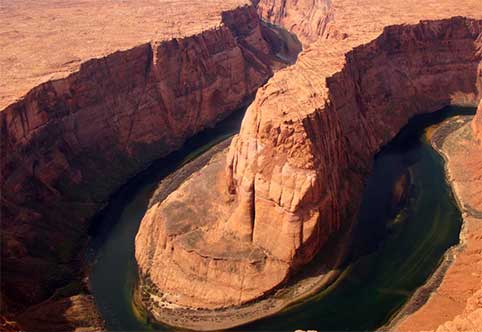
Horseshoe Bend Air Tour
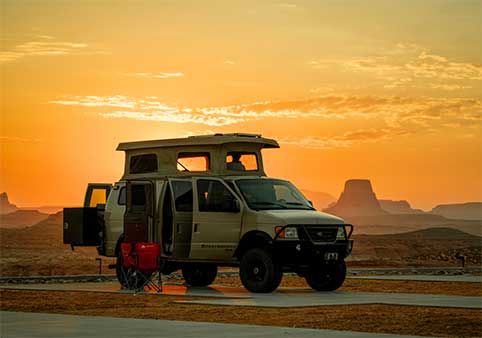
Antelope Point RV Park & Marina
THERE'S NOTHING BETTER THAN A NEW RV PARK ...
especially when it’s loaded with luxurious lake-life amenities and situated on ancient cliffs overlooking one of the most spectacular destinations in the American Southwest, Lake Powell.
Spectacular Amenities & Views
Fro
… More
THERE'S NOTHING BETTER THAN A NEW RV PARK ...
especially when it’s loaded with luxurious lake-life amenities and situated on ancient cliffs overlooking one of the most spectacular destinations in the American Southwest, Lake Powell.
Spectacular Amenities & Views
From our large, landscaped sites with turf, full hook-ups, 30 and 50 apm service, 70’ pads, wi-fi, and our public areas with pergolas, grills, fireplaces, and even a putting green, you’ll enjoy amazing views as well as incredible sunrises and sunsets while gazing upon Tower Butte and the red sandstone cliffs of the Navajo Nation’s Colorado Plateau. Drift off to sleep after adventurous days pondering the mysteries of the Milky Way while experiencing evening solitude and the darkest skies in Northern Arizona.
Pet-Friendly
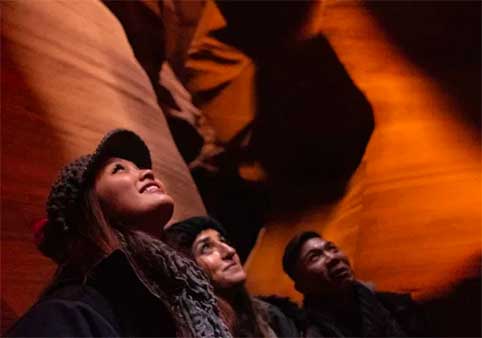
Antelope Canyon and Horseshoe Bend Tour
Tours from Flagstaff | Family-Friendly
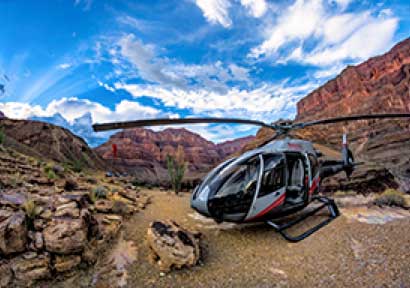
Maverick Helicopter Tours from Las Vegas
Tours from Las Vegas

Lake Powell Taxi Services
Private Tour | Custom Options Available | Native (Dine) Operated | Family-Friendly
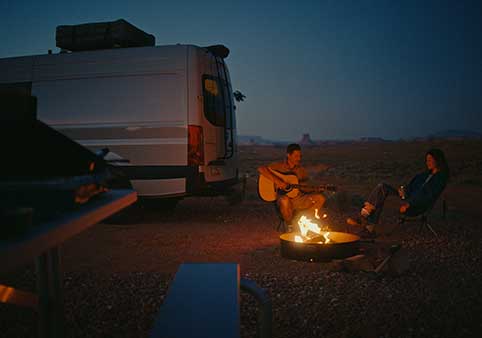
Roam America Horseshoe Bend
Pet-Friendly | Laundry | Firepits | Pool | Access to Trails | UTV Friendly | RV Campground | RV Sites | Cabins Rentals | On-Site Dining | General Store
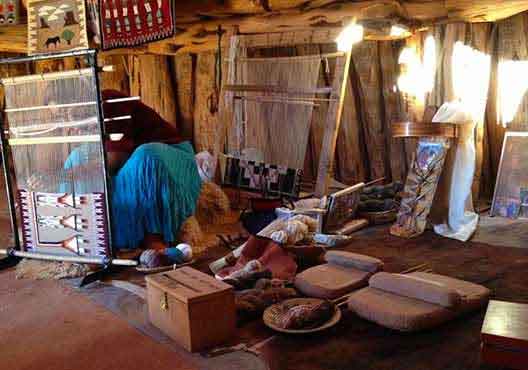
Cultural Tour of Lower Monument Valley Tribal Park
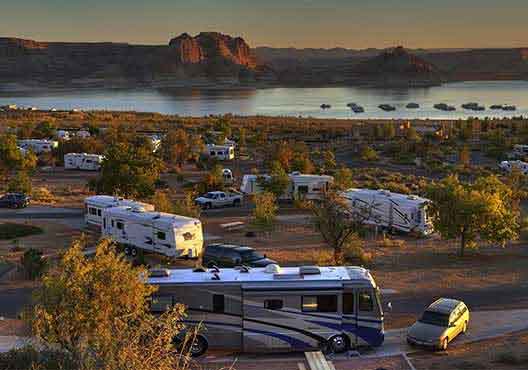
Wahweap RV & Campground
Pet-Friendly
Peekaboo Slot Canyon
Guided Slot Canyon Trips
3-Day National Parks Tour: Zion, Bryce Canyon, Monument Valley and Grand Canyon
Tours from Las Vegas
Private White Pocket Vermilion Tour
Private Transportation: Antelope Canyon and Horseshoe Bend from Las Vegas
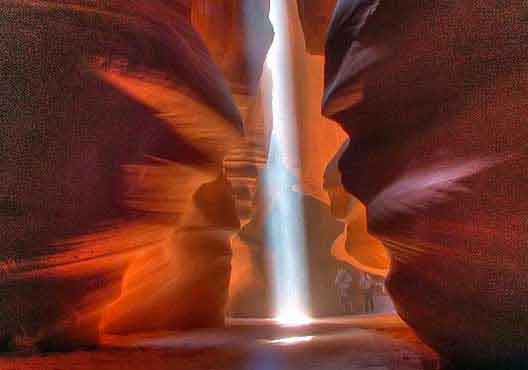
Come Explore Antelope Canyon and Horseshoe Bend. Jump onboard your private tour vehicle from Las Vegas and we will transport you to a magical place! Experience Antelope Canyon & Horseshoe Bend, with private transportation. The original Navajo name Tsé bighánílíní means … More
Come Explore Antelope Canyon and Horseshoe Bend. Jump onboard your private tour vehicle from Las Vegas and we will transport you to a magical place! Experience Antelope Canyon & Horseshoe Bend, with private transportation. The original Navajo name Tsé bighánílíní means "the place where water runs through rocks." Antelope Canyon's sculpted sandstone walls offer memorable photo opportunities with a walkable corridor at the bottom of the canyon floor. It was formed by flash flood waters that rushed into the cracks of the Navajo sandstone along with the power of wind erosion. With the daylight dancing through the narrow openings from the top provides multiple kinds of light reflections and colors. This amazing changing color show makes this area a popular destination for photographers and tourists. From the canyon, you will visit an area where the Colorado River makes a 280 degree turn around the Horseshoe bend shape of the rock, hence its name of Horseshoe Bend.
Tours from Las Vegas | Private Tour
Buckskin Gulch Private Tour
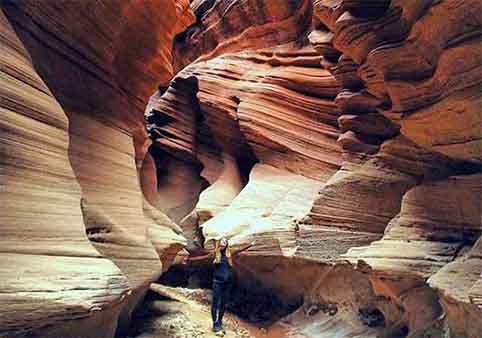
Buckskin Gulch is one of the largest slot canyons and unless you know your way around, you may miss out on seeing some of the best parts of the canyon. This Buckskin Gulch Private Tour from Kanab takes you into the slot canyon with a guide who knows the greatest areas to take photos. Pl … More
Buckskin Gulch is one of the largest slot canyons and unless you know your way around, you may miss out on seeing some of the best parts of the canyon. This Buckskin Gulch Private Tour from Kanab takes you into the slot canyon with a guide who knows the greatest areas to take photos. Plus, you'll see some of the petroglyph rock writings from the early Archaic period.
Guided Slot Canyon Trips
Lake Powell Campgpound
Monument Valley Sunrise or Sunset Tour
Antelope Slot Canyon and Horseshoe Bend Day Tour from Flagstaff
Tours from Flagstaff
2.5 Hour Guided Tour of Monument Valley
Upper Antelope Canyon Ticket
Grand Canyon, Monument Valley and Zion National Park 3-Day Tour
Tours from Las Vegas
Lees Ferry Campground
Pet-Friendly
Lower Antelope Canyon & Horseshoe Bend Tour from Las Vegas
Get out of Las Vegas for the day, soak up the views of some of the country's most striking landscapes, and be back on the Strip in time for a show. This guided tour takes you to the sandstone slot canyon of Antelope Canyon and to the dramatic Horseshoe Bend, carved from Navajo sandstone … More
Get out of Las Vegas for the day, soak up the views of some of the country's most striking landscapes, and be back on the Strip in time for a show. This guided tour takes you to the sandstone slot canyon of Antelope Canyon and to the dramatic Horseshoe Bend, carved from Navajo sandstone.
Tours from Las Vegas
Bullfrog RV & Campground
Pet-Friendly
East Zion: Half-Day Canyoneering Tour
Guided Slot Canyon Trips
East Zion: Full-Day Canyoneering Adventure
Guided Slot Canyon Trips
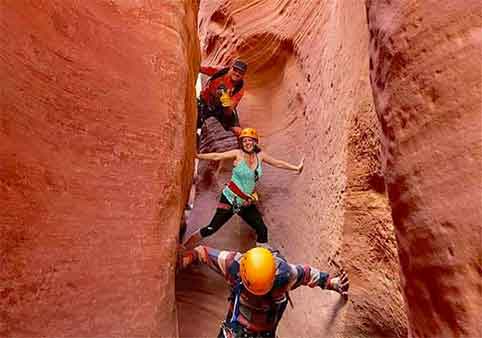
East Zion Experiences ATV Slot Canyon Tour
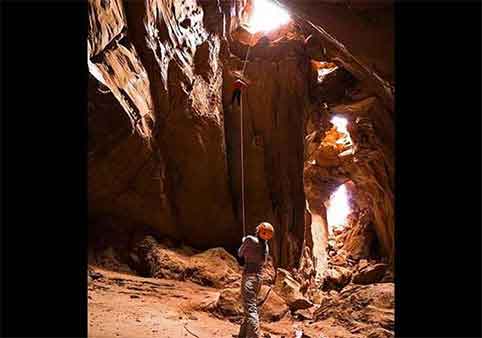
Goblin Valley State Park Canyoneering Adventure
Guided Slot Canyon Trips
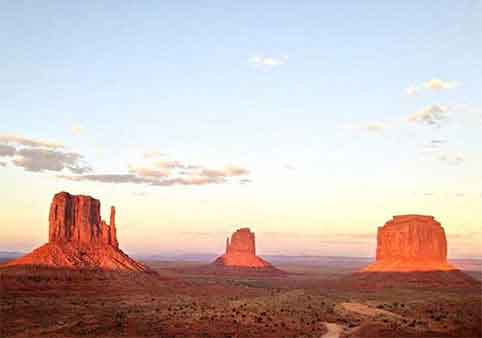
1.5 Hour Tour of Monument Valley's Valley Loop Drive
Local Business Spotlight