Glen Canyon Dam
Glen Canyon Dam is a 710-foot concrete arch dam on the Colorado River just north of Page, Arizona. Built by the U.S. Bureau of Reclamation between 1956 and 1966, it holds back Lake Powell, one of the largest man-made reservoirs in the United States. The dam is impossible to miss if you are driving Highway 89 through Page — it spans the canyon in a smooth concrete curve, with the bridge carrying traffic across its face.
Most visitors stop at the dam for one of three reasons: to walk across the bridge for the view, to tour the visitor center and learn how the dam works, or to take the guided tour that descends inside the structure. All three are manageable in a single hour-long stop, which makes the dam an easy addition to a day that includes Horseshoe Bend or Antelope Canyon.
What the Dam Is and Why It Exists
The dam is 710 feet tall from bedrock to crest — roughly the height of a 60-story building — and 1,560 feet across at the top. It contains just under 5 million cubic yards of concrete. When the gates closed in 1963, the Colorado River began backing up into what is now Lake Powell, a reservoir that took 17 years to fill to capacity. At full pool, the lake holds 27 million acre-feet of water and stretches 186 miles upriver into Utah.
The dam serves three functions: it generates hydroelectric power for the southwestern United States, it stores water for the Upper Colorado River Basin states (Colorado, Wyoming, Utah, and New Mexico), and it regulates flow to the Lower Basin states (California, Nevada, and Arizona). The water it releases also feeds the Grand Canyon downstream, where the controlled flow has changed the river's ecology in ways that are still being studied and debated.
As of late summer, Lake Powell sits at approximately 3,520 feet in elevation — about 180 feet below its full pool level of 3,700 feet and roughly 23 percent of its live capacity. The Bureau of Reclamation publishes daily water level updates. For visitors, the lower level means a wider band of exposed sandstone along the shoreline, but the dam itself and the bridge remain fully accessible regardless of lake level.
What You Can Do There
Carl Hayden Visitor Center
The visitor center sits on the west side of the dam, directly off Highway 89. It is free to enter. Inside, exhibits explain the dam's construction, the geology of Glen Canyon, and the engineering of the Colorado River storage system. A large relief map of Lake Powell covers one wall and is useful for understanding the reservoir's shape and scale. A 20-minute film runs on a loop. The center has a bookstore operated by the Glen Canyon Conservancy, restrooms, and free Wi-Fi.
The center's balcony looks directly at the dam's downstream face and the Colorado River below. Morning light is best for photography from this angle.
Walk Across the Bridge
The Glen Canyon Dam Bridge, completed in 1959, carries Highway 89 across the canyon 700 feet above the river. It has a dedicated pedestrian walkway on both sides, separated from traffic by a concrete barrier. The walk is free, open 24 hours a day, and takes about 10 minutes one way at a leisurely pace.
The view from the bridge is different from the visitor center balcony. You are looking down at the dam's crest and the deep green water of the reservoir on the upstream side, and the concrete face and power plant on the downstream side. The walkway has guardrails, but wind can be strong — secure hats and cameras. The bridge is lit at night, which makes it a possible stop for photographers who want to avoid the daytime heat.
Take the Dam Tour
The Bureau of Reclamation offers guided tours that descend into the dam's interior. The tour lasts roughly 45 minutes and is limited to 20 people per group. It costs $5 per person. Children are permitted, but infants count toward the 20-person limit.
Tours are first-come, first-served. You can reserve a spot up to 24 hours in advance, but you must do so in person at the Carl Hayden Visitor Center and pay at the time of reservation. There is no online booking. During busy periods — summer mornings and holiday weekends — tours can sell out by midday.
Security screening: The dam is a federal power plant facility. You cannot bring bags, purses, backpacks, knives, weapons, or food on the tour. Wallets, cameras, and clear water bottles are permitted. Leave everything else in your vehicle.
On the tour, you walk through a tunnel in the dam wall, view the generator room from an observation deck, and learn about the dam's construction and current operations. The tour involves stairs and walking on concrete surfaces. It is not wheelchair accessible.
Visitor Center Hours and Logistics
| Season | Hours |
|---|---|
| March through late October | 9 a.m. – 5 p.m. MST |
| November through late February | 9 a.m. – 4 p.m. MST |
| Thanksgiving, Christmas, New Year's Day | Closed |
Parking at the visitor center is free and accommodates cars, RVs, and buses. Plan 45 to 60 minutes for the visitor center itself, plus another 45 minutes if you are taking the dam tour. The bridge walk adds 20 to 30 minutes round-trip, depending on how long you spend at the viewpoints.
There is no food at the dam or visitor center. The nearest restaurants are in Page, roughly two miles south.
How to Combine with Nearby Attractions
The dam sits at the geographic center of the Page area, which makes it easy to string together with other stops:
- Horseshoe Bend: Five minutes south on Highway 89. The overlook parking lot is on the east side of the highway. Most visitors do the dam first, then Horseshoe Bend, since the bend is best in late afternoon light.
- Antelope Canyon: Ten minutes east on Highway 98. If you have an Antelope Canyon tour reservation, check the time and work backward — the dam visit is flexible, but the canyon tour is not.
- Lake Powell: Wahweap and Antelope Point marinas are roughly 10–15 minutes from the dam. If you are renting a boat or taking a lake cruise, the dam visitor center is a logical stop beforehand to orient yourself with the relief map.
- Lees Ferry: Forty minutes southeast on Highway 89A. The historic river crossing and rafting put-in is downstream from the dam.
Current Water Level Context
Lake Powell's water level fluctuates seasonally and has trended downward over the past two decades due to reduced snowpack in the Rocky Mountains and increased water demand across the Colorado River Basin. The Bureau of Reclamation manages releases from Glen Canyon Dam according to a 24-month operating plan that balances the needs of Lake Powell and Lake Mead.
For travelers, the practical effect of lower water is mainly visible at the lake itself: some boat ramps are closed or shortened, and the shoreline has shifted. The dam, the bridge, and the visitor center are unaffected by water level. The power plant continues to operate as long as the reservoir stays above 3,490 feet — the minimum power pool elevation. As of late summer, the lake is roughly 30 feet above that threshold.
If you are planning a Lake Powell boating trip, check the current water level and boat ramp status on the National Park Service website before you arrive.
Frequently Asked Questions
What is Glen Canyon Dam?
Glen Canyon Dam is a 710-foot concrete arch dam on the Colorado River near Page, Arizona. Built between 1956 and 1966, it creates Lake Powell and generates hydroelectric power for the southwestern United States.
Can you walk across Glen Canyon Dam Bridge?
Yes. The bridge has a dedicated pedestrian walkway on both sides, separated from traffic. It is free to walk across and open 24 hours a day. The walk takes about 10 minutes one way.
How tall is Glen Canyon Dam?
The dam is 710 feet (216 meters) tall from bedrock to crest — roughly the height of a 60-story building.
Is there a visitor center at Glen Canyon Dam?
Yes. The Carl Hayden Visitor Center is on the west side of the dam, off Highway 89. It is free to enter and includes exhibits, a relief map of Lake Powell, a 20-minute film, a bookstore, and restrooms.
How did Glen Canyon Dam create Lake Powell?
When the dam gates closed in 1963, the Colorado River began backing up behind the concrete wall. The reservoir took 17 years to fill to capacity. At full pool, Lake Powell holds 27 million acre-feet of water and stretches 186 miles into Utah.
What is the water level at Lake Powell right now?
Lake Powell's water level changes daily. As of late summer, the reservoir sits at approximately 3,520 feet — about 180 feet below full pool. Check the Bureau of Reclamation's website for the current elevation.
Can you tour inside Glen Canyon Dam?
Yes. The Bureau of Reclamation offers 45-minute guided tours for $5 per person. Tours are limited to 20 people and are first-come, first-served. Reservations can be made up to 24 hours in advance in person at the Carl Hayden Visitor Center. Security restrictions apply: no bags, purses, food, knives, or weapons.
How far is Glen Canyon Dam from Page, Arizona?
The dam is roughly two miles north of downtown Page on Highway 89. It is a five-minute drive from the center of town.
Guided Tours That Include Glen Canyon Dam
Several tour operators in the Page area include the dam in their itineraries, either as a stop or as a viewing point from the air or water:
The dam controls the water that makes downstream rafting possible. For rafting trips that launch from the river's edge below the dam, see Colorado River rafting.
The dam controls the water that carved Horseshoe Bend. For the overlook visitor guide and tour options, see Horseshoe Bend tours.
For an aerial view of Glen Canyon Dam and the reservoir it holds back, see air tours.
For lodging near the dam, see our Lake Powell hotels page. To plan the rest of your trip, visit our things to do in Page guide.
See Glen Canyon on a Guided Tour
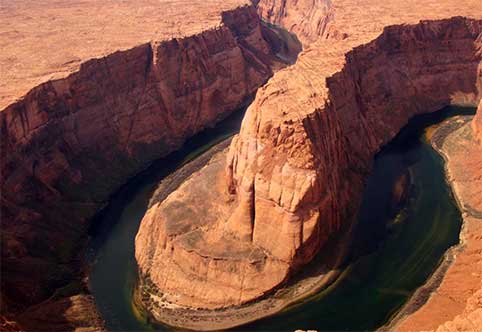
Horseshoe Bend Air Tour
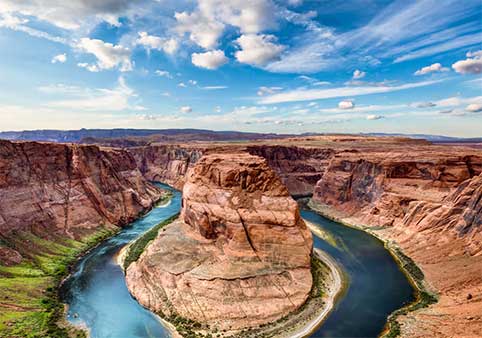
Horseshoe Bend Flightseeing Tour
Family-Friendly

Lake Powell Taxi Services
Private Tour | Custom Options Available | Native (Dine) Operated | Family-Friendly
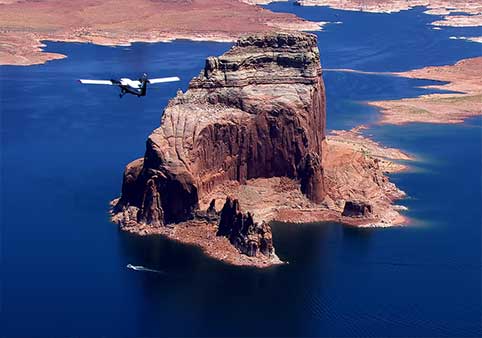
Las Vegas To Antelope Canyon Airplane Tour
This thrilling Antelope Canyon tour begins with a sightseeing airplane flight from Boulder City, Nevada, to Page, Arizona. En route, you'll enjoy aerial views of Lake Mead, Hoover Dam, and Glen Canyon. Transport awaits at Page Airport to escort passengers to some of the world-famous des … More
This thrilling Antelope Canyon tour begins with a sightseeing airplane flight from Boulder City, Nevada, to Page, Arizona. En route, you'll enjoy aerial views of Lake Mead, Hoover Dam, and Glen Canyon. Transport awaits at Page Airport to escort passengers to some of the world-famous destinations in this area. The adventure begins with a stop at the Horseshoe Bend overlook, the 270° curve of the Colorado River that has long been a photographer's favorite. This viewpoint is just a short hike before you encounter the iconic scenery.
The next stop in the journey is nearby Antelope Canyon for a guided tour of its interior wonder. Led by a Navajo guide, the winding slot canyon offers unique views you won't capture anywhere else, so have your camera ready. You'll explore the twisting canyon floor created by rippling stone walls and enjoy picturesque moments.
Family-Friendly | Tours from Las Vegas
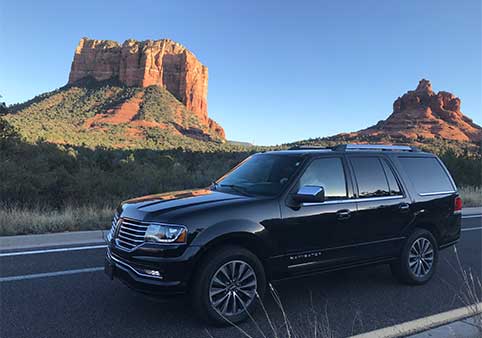
Arizona Private Tours
Custom Options Available | Family-Friendly | Tours from Flagstaff
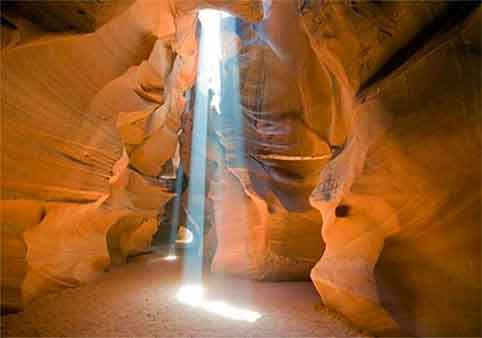
Antelope Canyon and Glen Canyon Scenic Tour
Local Business Spotlight